 Save
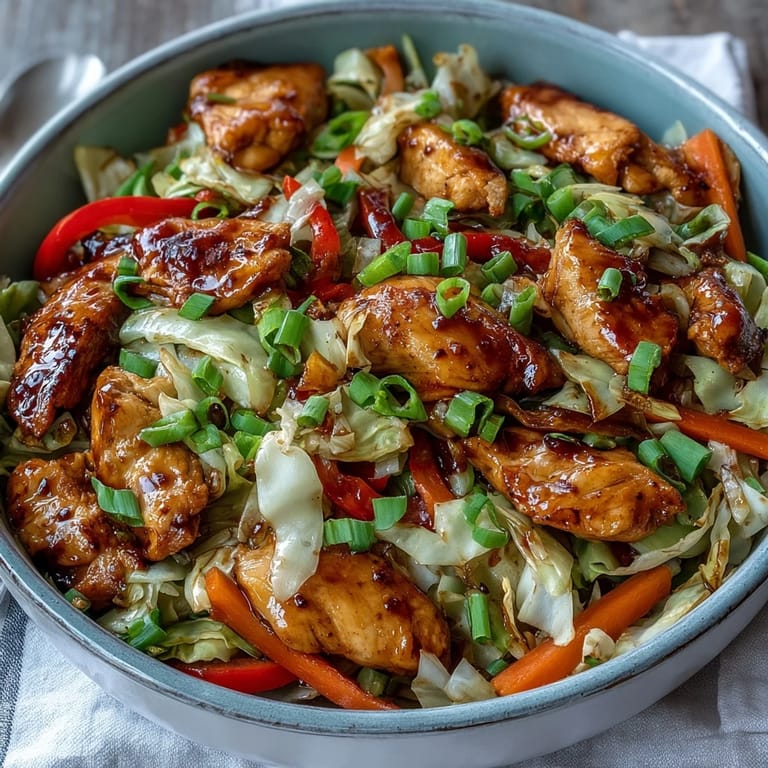
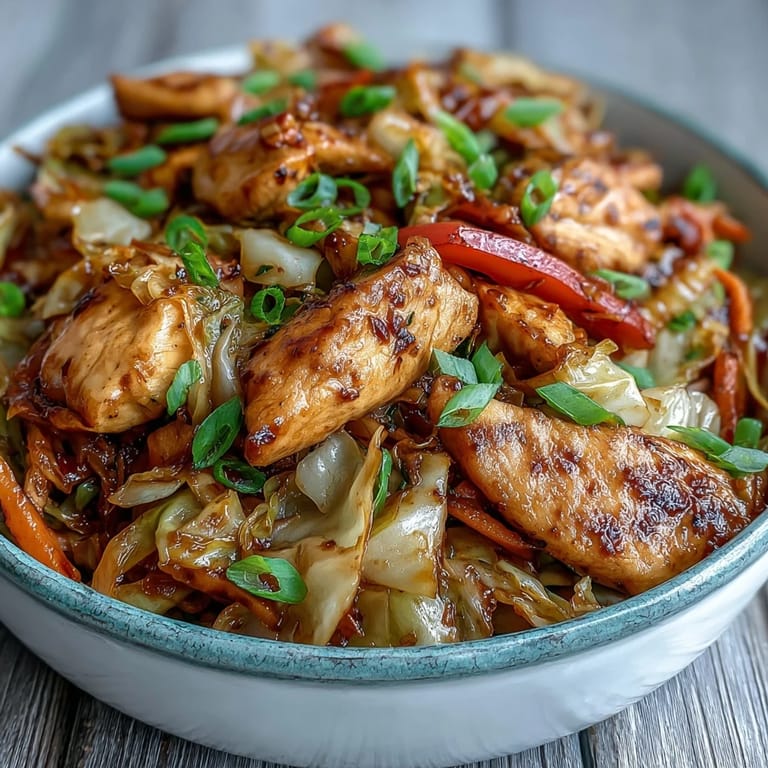
Save My neighbor once knocked on my door holding a half-wilted cabbage and a pack of chicken, asking if I had any quick ideas before her kids got home from soccer practice. We ended up throwing together this stir-fry in her kitchen, and she texted me later that night saying her picky eater asked for seconds. That spontaneous cooking session turned into my go-to recipe whenever I need something fast, filling, and actually tasty enough that nobody complains.
I started making this on repeat during a particularly busy month when I was tired of ordering takeout but too exhausted to plan elaborate meals. The smell of ginger and garlic hitting the hot pan became a signal that dinner was going to be okay, even if the rest of the day wasnt. My partner would wander into the kitchen within seconds of that first sizzle, drawn by the scent alone.
Ingredients
- Boneless, skinless chicken breast or thighs, thinly sliced: Thighs stay juicier and more forgiving if you overcook them slightly, but breasts work great if you slice them thin and dont walk away from the pan.
- Green cabbage, cored and thinly sliced: The star vegetable here, it softens just enough to soak up the sauce while keeping a satisfying crunch that makes every bite interesting.
- Carrot, julienned: Adds a touch of sweetness and a pop of color, plus it cooks at the same rate as the cabbage if you slice it thin.
- Red bell pepper, thinly sliced: I love the way it brightens up the whole dish and adds a slight fruity note that balances the salty sauce.
- Green onions, sliced: Toss these in at the very end so they stay bright and fresh, almost like a garnish that actually has flavor.
- Soy sauce: The salty backbone of the sauce, use tamari if youre avoiding gluten and it works just as well.
- Oyster sauce: This is what gives the sauce that deep, savory richness you cant quite put your finger on but always crave.
- Hoisin sauce: A little sweet, a little tangy, it rounds out the sauce and makes it cling to everything beautifully.
- Rice vinegar: Just enough acidity to keep the sauce from feeling heavy or one-note.
- Sesame oil: A small amount goes a long way, adding that nutty aroma that makes the whole kitchen smell like a good restaurant.
- Cornstarch: Mixed with water, this thickens the sauce so it coats the chicken and veggies instead of pooling at the bottom of the pan.
- Sugar: Balances the salty and tangy flavors, just a teaspoon makes everything taste more complete.
- Vegetable oil: For high heat cooking without burning, keeps everything moving smoothly in the pan.
- Garlic, minced: Three cloves might seem like a lot, but they mellow out and become sweet and fragrant when they hit the oil.
- Fresh ginger, peeled and grated: This is the ingredient that makes people ask what your secret is, the warmth and zing are irreplaceable.
Tired of Takeout? 🥡
Get 10 meals you can make faster than delivery arrives. Seriously.
One email. No spam. Unsubscribe anytime.
Instructions
- Mix the sauce:
- In a small bowl, whisk together soy sauce, oyster sauce, hoisin sauce, rice vinegar, sesame oil, cornstarch, water, and sugar until smooth. Set it aside so its ready to pour when things start moving fast.
- Cook the chicken:
- Heat 1 tablespoon vegetable oil in a large skillet or wok over medium-high heat, add the sliced chicken, and cook for 4 to 5 minutes until golden and cooked through. Remove the chicken from the pan and set it aside so it doesnt overcook while you handle the vegetables.
- Saute the aromatics:
- Add the remaining tablespoon of oil to the same pan, then toss in the garlic and ginger, stirring constantly for about 30 seconds until the smell makes you hungry. Dont let them burn or theyll turn bitter.
- Stir-fry the vegetables:
- Add the cabbage, carrot, and bell pepper to the pan, stirring and tossing for 3 to 4 minutes until theyre crisp-tender and starting to soften. You want them to still have some bite, not turn mushy.
- Combine and coat:
- Return the cooked chicken to the pan, pour in the prepared sauce, and toss everything together over the heat. Cook for 2 to 3 minutes, stirring often, until the sauce thickens and clings to every piece of chicken and vegetable.
- Finish and serve:
- Stir in the sliced green onions, taste, and adjust seasoning if needed. Serve hot, straight from the pan, with steamed rice or noodles if you want to stretch it further.
 Save
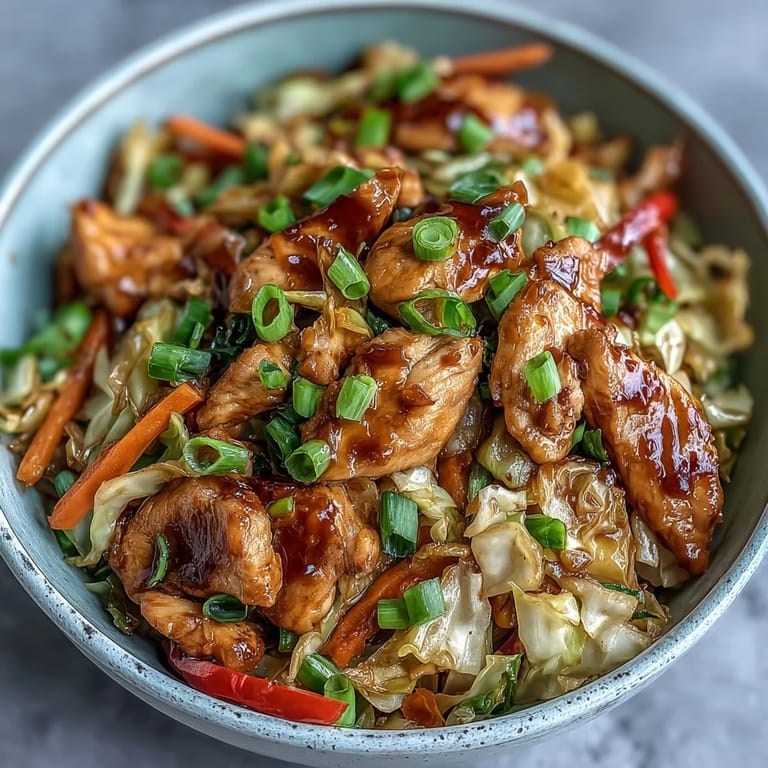
Save One evening I made this for a friend going through a rough breakup, and she sat at my kitchen counter eating straight from the skillet, saying it was the first thing that tasted good in days. We didnt talk much, just ate and listened to music, and somehow that simple stir-fry became a comfort neither of us expected.
Swapping Proteins and Making It Yours
Ive made this with firm tofu pressed and cubed, shrimp peeled and deveined, and even leftover rotisserie chicken shredded and tossed in at the end. Each version works as long as you adjust the cooking time, tofu needs a little longer to get crispy, shrimp cooks in under three minutes, and rotisserie chicken just needs to warm through. The sauce is forgiving enough that you can make it vegetarian, swap in whatever protein is on sale, or use up whatevers about to go bad in your fridge.
Adjusting Heat and Flavor
If you like a little kick, add a pinch of chili flakes when you saute the garlic and ginger, or drizzle some sriracha over your bowl at the table. I once added too much and had to balance it out with an extra splash of rice vinegar and a bit more sugar, which taught me that this sauce is surprisingly easy to adjust on the fly. Taste it before you pour it in, and dont be afraid to tweak it to match your mood.
Serving and Storing Leftovers
This stir-fry is fantastic over jasmine rice, brown rice, or even rice noodles if you want something a little different. Leftovers keep well in the fridge for up to three days, though the cabbage will soften a bit as it sits, losing some of that crisp texture. I usually reheat it in a hot skillet rather than the microwave to bring back a little of the sear and keep it from getting too soggy.
- If meal prepping, store the sauce separately and toss it together when reheating for the best texture.
- This scales up easily, just use a bigger pan or cook in batches so everything gets properly seared.
- Freeze any extra sauce in an ice cube tray and pop out a cube or two whenever you need a quick stir-fry fix.
 Save
Save This recipe has pulled me out of more weeknight slumps than I can count, and I hope it does the same for you. Theres something deeply satisfying about a meal that tastes this good but comes together so fast.
Recipe FAQs
- → Can I use a different protein instead of chicken?
Yes, you can substitute tofu, shrimp, or thinly sliced beef or pork. Adjust cooking times accordingly—shrimp cooks faster while beef may need a bit longer.
- → How do I keep the cabbage crisp and not soggy?
Cook over high heat and stir-fry quickly for only 3-4 minutes. Don't overcrowd the pan, and avoid covering it, which traps steam and makes vegetables soggy.
- → Can this dish be made gluten-free?
Absolutely. Use tamari instead of soy sauce and check that your oyster sauce and hoisin sauce are certified gluten-free versions.
- → What can I serve with this stir-fry?
Serve over jasmine rice, brown rice, fried rice, or Asian noodles like lo mein or rice noodles. It also pairs well with steamed edamame or spring rolls.
- → How do I store and reheat leftovers?
Store in an airtight container in the refrigerator for up to 3 days. Reheat in a skillet over medium heat or microwave, adding a splash of water if needed to loosen the sauce.
- → Can I add more vegetables to this stir-fry?
Yes, snap peas, broccoli, mushrooms, or bok choy work great. Add heartier vegetables like broccoli earlier in the cooking process so they have time to cook through.