 Save
Save My grandmother's kitchen always smelled like melting cheese and butter on a Sunday afternoon, and that's when I first understood why scalloped potatoes matter. She'd layer them with such care, her hands moving through the ritual like she was building something sacred, and I'd watch from the counter wondering how something so simple could taste so impossibly rich. When I finally made my own batch years later, standing alone in my kitchen with a whisk in one hand and cream in the other, I realized she'd taught me more than just a recipe—she'd shown me how comfort food becomes memory. This version is stripped down to pure pleasure: creamy, cheesy, and ready in under two hours.
I made this for a potluck once where everyone brought something trendy and Instagram-worthy, and I almost didn't bring the scalloped potatoes—until someone asked for thirds and then the whole dish was gone before dessert showed up. There's something quietly powerful about a dish that doesn't need to announce itself; it just wins people over with flavor and warmth. That night taught me that the most memorable food often looks humble but tastes like you spent all day in the kitchen.
Ingredients
- Yukon Gold or Russet potatoes (2 lbs, peeled and thinly sliced): Yukon Golds hold their shape better and have a naturally buttery taste, but Russets work fine if you're careful not to overcook them—I've learned this the hard way when layers turned to mush.
- Yellow onion (1 medium, thinly sliced): The sharpness mellows into the cheese sauce as it bakes, adding subtle sweetness without making itself known.
- Sharp cheddar cheese (2 cups shredded): The word sharp matters here because mild cheddar gets lost in the cream—go for that bite.
- Mozzarella cheese (1 cup shredded): This creates stretch and helps the sauce cling to every potato layer, while cheddar carries the flavor.
- Whole milk (2 cups): Full fat is non-negotiable; lower fat milk won't create that silky sauce you're after.
- Unsalted butter (2 tbsp): You control the salt this way, which matters when cheese is already salty.
- All-purpose flour (2 tbsp): This thickens the sauce into something luxurious instead of watery—don't skip it or you'll have a sad, soupy situation.
- Salt (1 tsp): Taste before the final bake because potatoes absorb salt unevenly.
- Black pepper (½ tsp): Freshly ground if possible; it rounds out the cheese flavor.
- Garlic powder (½ tsp): Fresh garlic tends to turn bitter after an hour in the oven, so the powder plays nicer here.
- Paprika (¼ tsp): This gives the top color and a whisper of smokiness that makes people wonder what your secret is.
Tired of Takeout? 🥡
Get 10 meals you can make faster than delivery arrives. Seriously.
One email. No spam. Unsubscribe anytime.
Instructions
- Set your stage:
- Preheat the oven to 375°F and grease your 9x13-inch baking dish with a little butter so nothing sticks—I learned to do this first so you're not hunting for butter when your hands are full. This temperature is your sweet spot: hot enough to get golden edges without drying out the potatoes.
- Build your sauce base:
- Melt butter in a medium saucepan over medium heat, then whisk in the flour for about a minute—it'll look like wet sand and smell toasty. You're creating what French cooks call a roux, and it's the invisible magic that makes the cream thick and clingy.
- Create the creamy foundation:
- Slowly pour in the milk while whisking constantly, which sounds tedious but prevents lumps that make people think you don't know what you're doing. Keep whisking for 3-4 minutes until it thickens slightly and coats the back of a spoon.
- Melt the cheese in:
- Remove from heat and stir in salt, pepper, garlic powder, and half the cheeses—cheddar first, then mozzarella—until everything is smooth and glossy. The residual heat melts them perfectly; don't keep it on the stove or the cheese breaks and looks grainy.
- Layer with intention:
- Spread half the potato slices across the bottom of the dish, then scatter half the onion slices over them, then pour half the cheese sauce over that—each layer matters because it flavors the potatoes as everything bakes. Repeat with the remaining potatoes, onions, and sauce like you're building something intentional.
- Top it with promise:
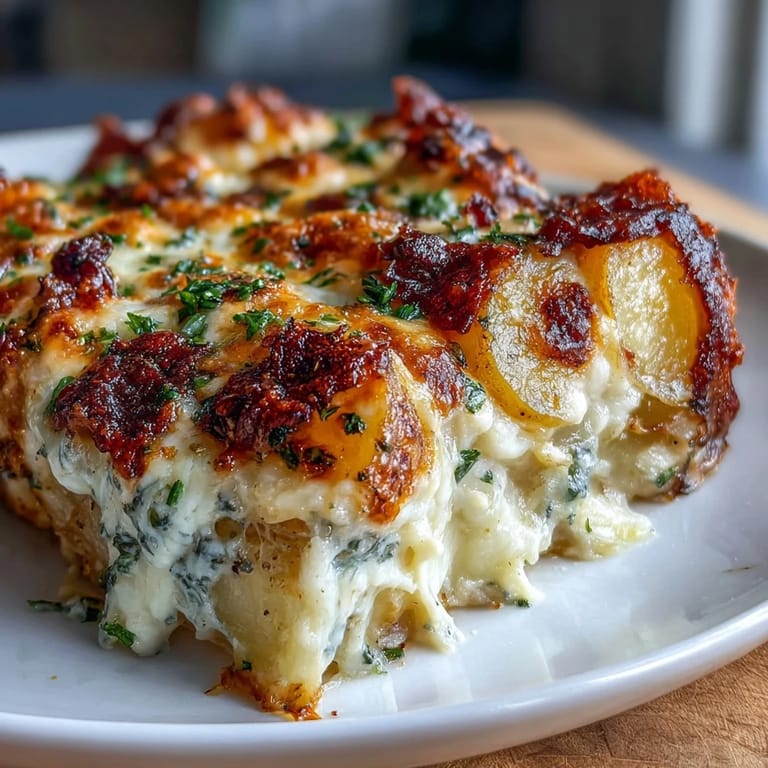
- Sprinkle the remaining shredded cheeses and paprika over the top layer—this is what catches the heat and turns golden and gorgeous.
- Two-stage bake for perfection:
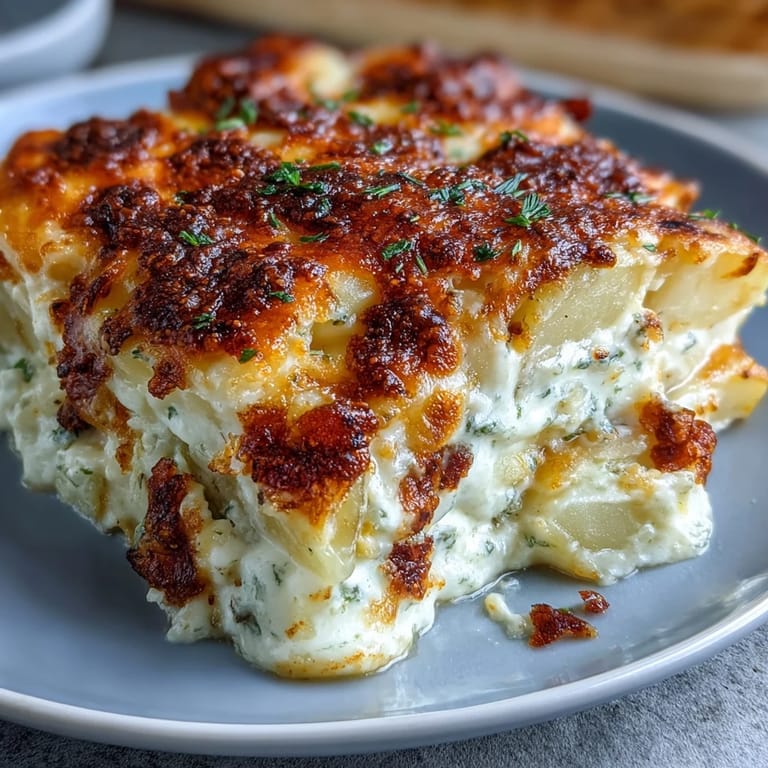
- Cover tightly with foil and bake for 40 minutes, which keeps the potatoes from drying out while the cheese melds. Then remove the foil and bake another 25-30 minutes until the potatoes are fork-tender and the top is deep golden—check by piercing with a knife if you're uncertain.
- Rest before serving:
- Let it sit for 10 minutes after it comes out—this is when everything sets slightly and the flavors finish marrying. Serve it warm with gratitude.
 Save
Save There was a winter dinner when my partner asked if I'd made the scalloped potatoes, and I realized I'd stopped thinking of this as cooking and started thinking of it as something I do for people I want to feed well. That shift—from recipe to ritual—is when a dish stops being about technique and becomes about care.
The Cheese Strategy That Changes Everything
Using two cheeses isn't fancy cooking; it's smart cooking. Sharp cheddar brings personality and punch, while mozzarella acts like edible glue that holds the sauce to every potato layer. I used to make this with just one cheese and wondered why it felt incomplete, until a friend who grew up eating real Italian food pointed out that pizzaiolos use multiple cheeses for a reason—different cheeses do different jobs. Now I think of it as a conversation between cheeses, each one saying something the other can't.
Make-Ahead Wisdom
You can assemble this entire dish hours before company arrives, cover it, and refrigerate it—just add 10-15 minutes to the total baking time since you're starting from cold. I've done this on holiday mornings when the kitchen was already chaos, and it freed me up to handle a salad or set the table instead of panicking about timing. The flavors actually deepen when it sits, as the sauce slowly hydrates the potato slices.
Variations That Keep This Recipe Fresh
Once you've made this the classic way, the variations start calling to you. A tiny pinch of nutmeg in the sauce tastes like autumn; fresh thyme or chives scattered between layers add brightness without changing the soul of the dish. Some people swear by Gruyère instead of cheddar for something earthier and more complex, and they're right, though it costs more and feels like dressing up for a casual Sunday.
- Fresh herbs work best when added halfway through the recipe (layered in) rather than cooked the whole time, or they'll taste like hay.
- If you want it vegetarian-free and somehow accidentally meat-filled, crumbled bacon between layers feels like a very good accident.
- Experiment once you know the baseline—confidence comes from understanding why it works in the first place.
 Save
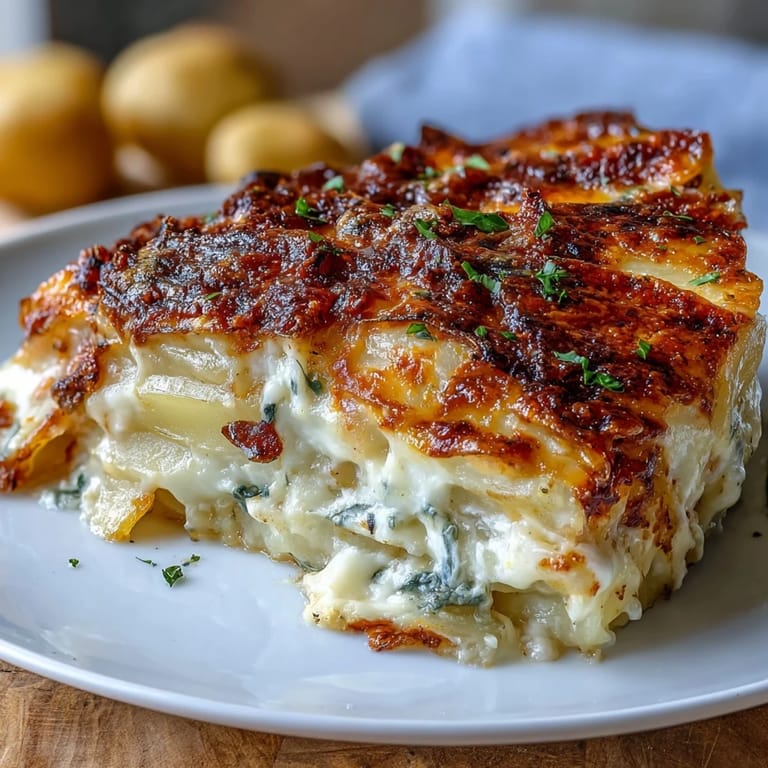
Save Scalloped potatoes are what I make when I want to say something without words, when a dish needs to taste like it was made by someone who cares. Every time you pull this from the oven, golden and bubbling, you're not just serving a side dish—you're offering a moment of genuine comfort.
Recipe FAQs
- → What type of potatoes work best for this dish?
Yukon Gold or Russet potatoes are ideal due to their texture and ability to hold shape when sliced thinly and baked.
- → Can I use different cheeses in the layers?
Yes, Gruyère can be substituted for cheddar for a richer, more complex flavor while maintaining melty texture.
- → How do I ensure a smooth cheese sauce?
Whisking flour and butter into a roux before slowly adding milk helps prevent lumps, while stirring in cheese off the heat keeps the sauce creamy.
- → Is it possible to prepare this in advance?
Yes, layers can be assembled a few hours ahead and baked just before serving to maintain freshness and convenience.
- → How can I make this gluten-free?
Replace all-purpose flour with a gluten-free alternative to keep the sauce thick without gluten.