 Save
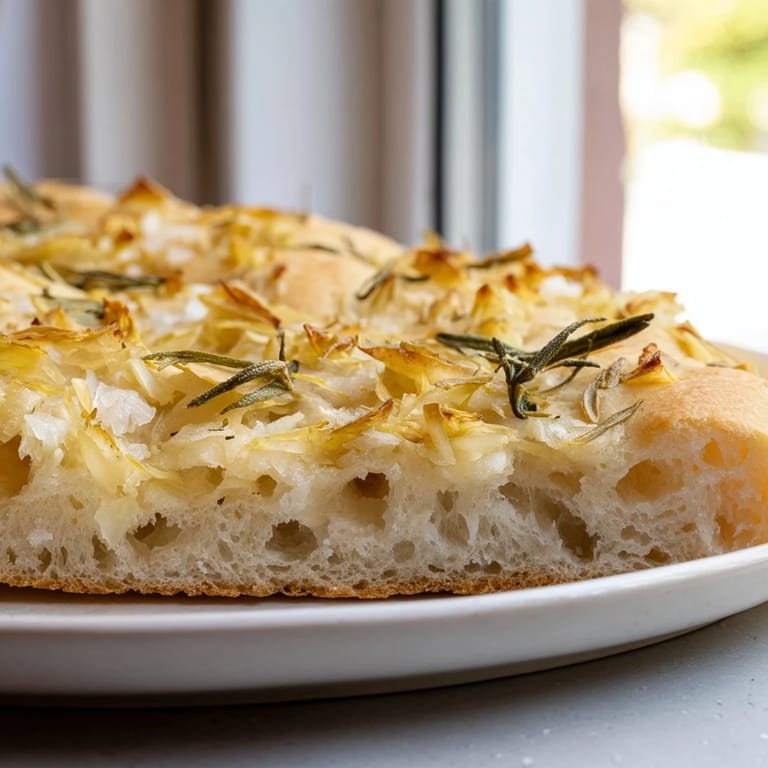
Save I pulled my first focaccia from the oven on a rainy afternoon when I had nothing but flour, yeast, and too much time on my hands. The smell of rosemary and olive oil filled the kitchen so fast it made my neighbor knock on the door to ask what I was baking. I had no idea something so simple could look that impressive, golden and dimpled like a little edible landscape. That bread disappeared in minutes, torn apart by hands that couldn't wait for plates. I've been making it ever since, and it never gets old.
The first time I brought this to a dinner party, I watched people pull it apart with their hands before the main course even arrived. Someone asked if I bought it from a bakery, and I just smiled and said it took me two hours, which technically wasn't a lie. My friend Anna ate three pieces standing in the kitchen and declared it better than any restaurant version she'd had. I realized then that homemade bread has a kind of magic that store-bought never will.
Ingredients
- Bread flour: The higher protein content gives focaccia that chewy, airy crumb you want, though all-purpose works in a pinch if that's what you have.
- Instant dry yeast: This stuff is foolproof and doesn't need to be bloomed first, which means one less step between you and warm bread.
- Fine sea salt: Goes into the dough for structure and flavor, but don't confuse it with the flaky kind you'll sprinkle on top later.
- Extra virgin olive oil: Use the good stuff here because you'll taste it in every bite, fruity and rich and unmistakably Italian.
- Lukewarm water: Too hot and it kills the yeast, too cold and nothing happens, so aim for bathwater warm and you'll be fine.
- Fresh rosemary: The woodsy, pine-like fragrance becomes almost sweet when it bakes, and dried just doesn't hit the same way.
- Flaky sea salt: Those big, crunchy crystals on top are non-negotiable, they're what make every bite feel special.
Tired of Takeout? 🥡
Get 10 meals you can make faster than delivery arrives. Seriously.
One email. No spam. Unsubscribe anytime.
Instructions
- Mix the dough:
- Toss the flour, yeast, and fine salt into a big bowl and give it a quick stir so everything's evenly distributed. Pour in the olive oil and lukewarm water, then stir with a wooden spoon until it turns into a shaggy, sticky mess that clings to everything.
- Knead until smooth:
- Turn that sticky dough out onto a lightly oiled counter and knead it for about eight to ten minutes, folding and pressing until it transforms into something smooth and elastic. You'll know it's ready when it stops sticking to your hands and bounces back when you poke it.
- Let it rise:
- Drop the dough into an oiled bowl, cover it with plastic wrap or a damp towel, and let it sit somewhere warm for about an hour. It should puff up and double in size, and when you press a finger into it, the dent should stay.
- Stretch into the pan:
- Drizzle a baking sheet with olive oil, then plop the risen dough into the center and use your fingertips to gently press and stretch it toward the edges. Don't worry if it resists a little, just let it rest for a few minutes and it'll cooperate.
- Second rise:
- Cover the stretched dough again and let it puff up for another thirty minutes while you preheat the oven to 220°C. This step is what gives focaccia that cloud-like texture inside.
- Dimple and top:
- Press your fingertips all over the dough to create deep dimples that will hold pools of olive oil. Drizzle generously with more oil, then scatter the rosemary and flaky salt on top like you're decorating a tiny garden.
- Bake until golden:
- Slide the pan into the hot oven and bake for twenty to twenty-five minutes, until the top is golden and the edges are crispy and deeply browned. Your kitchen will smell so good you'll want to bottle it.
- Cool and serve:
- Let the focaccia cool on the pan for a few minutes so it doesn't fall apart when you cut it. Slice it into squares or tear it with your hands, and serve it warm or at room temperature.
 Save
Save One Sunday morning I made this for brunch and served it with scrambled eggs and tomatoes, and my partner said it felt like we were sitting in a café in Rome. We weren't, we were in our tiny kitchen with mismatched chairs, but the focaccia made it feel that way. That's the thing about homemade bread, it turns ordinary moments into something you want to remember.
How to Know When It's Done
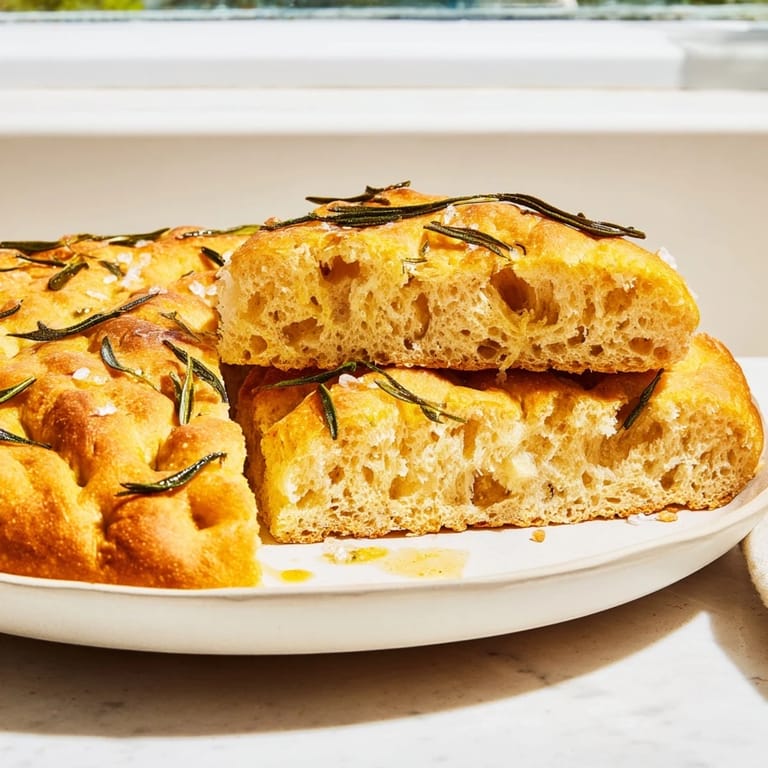
The edges should be deeply golden and crispy, almost caramelized, and when you lift a corner with a spatula the bottom should be firm and lightly browned. If the top looks pale, give it a few more minutes, but keep an eye on it because ovens vary and you don't want it to go from golden to burnt. Trust your nose too, when it smells like a bakery and the kitchen is hazy with olive oil steam, it's probably ready.
Storage and Reheating
Focaccia is best the day you bake it, still warm and soft with a crispy crust, but leftovers can be wrapped in foil and kept at room temperature for a day or two. To bring it back to life, warm it in a 180°C oven for about five minutes until the crust crisps up again. I've also toasted slices in a skillet with a little butter, and it's honestly dangerous how good that is.
Ways to Make It Your Own
Once you've made the basic version a few times, you can start playing around with toppings and nobody will judge you for it. I've pressed halved cherry tomatoes and garlic cloves into the dough before baking, and the tomatoes burst and caramelize into sweet little pockets of flavor. Olives, caramelized onions, thinly sliced potatoes, even grapes and honey if you're feeling adventurous, they all work.
- Try adding a sprinkle of parmesan or pecorino on top in the last five minutes of baking for a salty, cheesy crust.
- Swap the rosemary for thyme, oregano, or sage depending on what's in your garden or fridge.
- Drizzle with hot honey or balsamic glaze right before serving for a sweet and savory twist that surprises everyone.
 Save
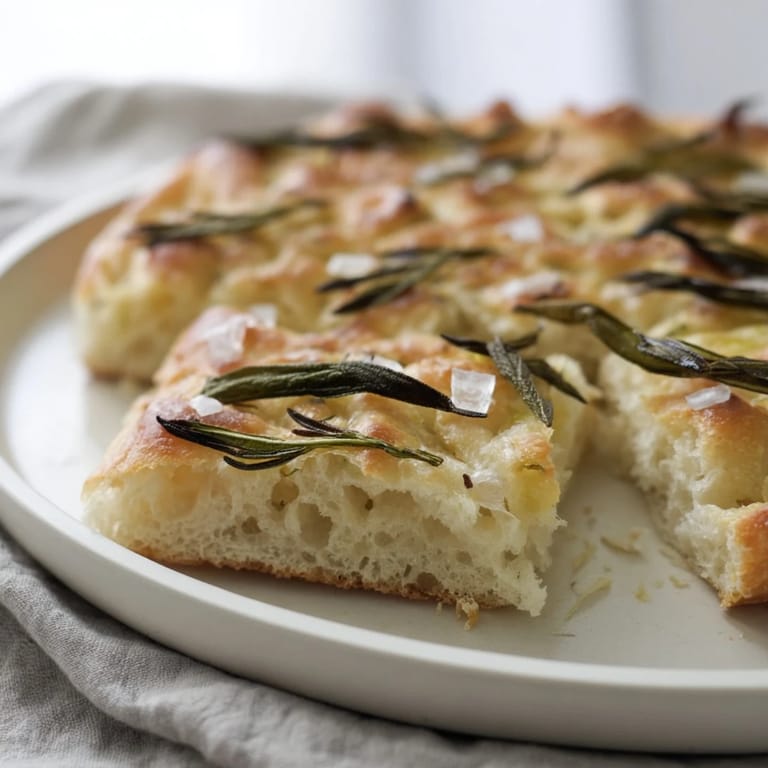
Save Every time I pull a tray of focaccia from the oven, I'm reminded that the best things in the kitchen are the ones you make with your hands. This bread doesn't need fancy equipment or hard-to-find ingredients, just a little time and the willingness to get flour on your countertop.
Recipe FAQs
- → How do you achieve a fluffy focaccia texture?
Allow the dough to rise twice, kneading it well to develop gluten. The double rise creates air pockets, resulting in a light, airy crumb.
- → Can I add other toppings besides rosemary and salt?
Yes, halved cherry tomatoes or sliced olives can be added before baking for extra flavor and visual appeal.
- → What type of flour works best for focaccia?
Bread flour is ideal as it provides the necessary gluten content for structure and chewiness.
- → How should focaccia be served for best taste?
Serve warm or at room temperature, optionally with extra virgin olive oil or balsamic vinegar for dipping.
- → Can I prepare the dough in advance?
The dough can be prepared ahead and refrigerated to slow fermentation but should be brought back to room temperature and allowed to rise before baking.