 Save
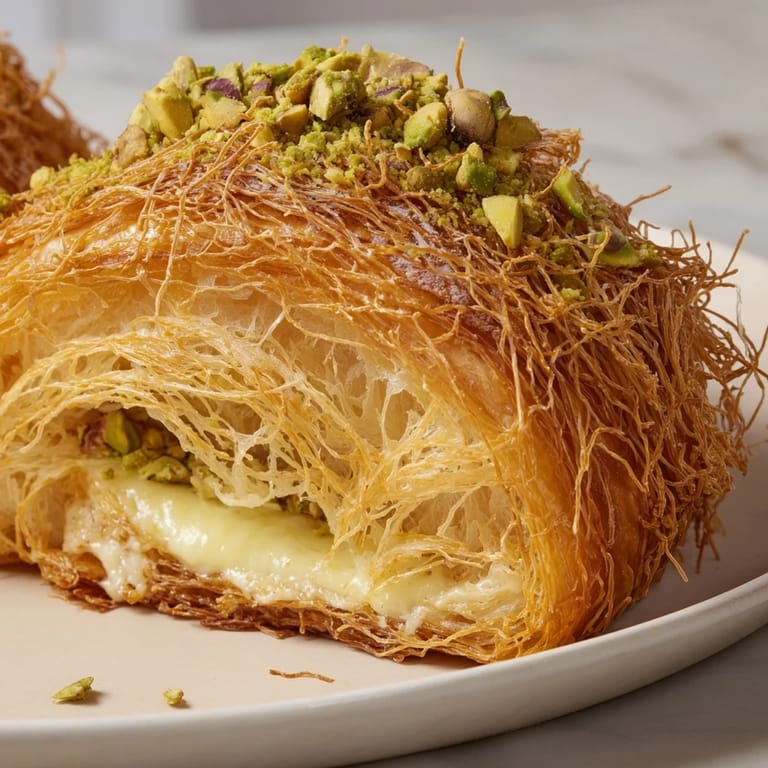
Save The first time I encountered pistachio cream was at a tiny patisserie in Lyon, where the baker's hands moved with such practiced ease that she barely looked down while assembling these golden croissants. I watched her brush syrup into the crevices, pipe that vibrant green filling, and crown each one with delicate phyllo shreds that crackled like spun sugar. Years later, standing in my own kitchen on a quiet Saturday morning, I realized I could recreate that magic—and it would taste even better because it came from my hands instead of just my memory.
I made these for my sister's book club, mostly as an excuse to impress her friends, but what happened instead was everyone stopped talking mid-sentence when they bit through the phyllo crust. One person closed her eyes—actually closed her eyes—and asked if I'd used real pistachios, as if that were somehow suspicious. It was one of those small kitchen victories that reminds you why you bother with butter-layered dough and finicky phyllo sheets.
Ingredients
- All-butter croissants (8, preferably day-old): Day-old croissants are sturdier and hold their shape better than fresh ones, which tend to tear when you slice them. If you can only find fresh, pop them in the fridge for a few hours first.
- Unsalted pistachios (120 g, shelled): Roasted pistachios taste more complex and less raw, but raw ones work fine if that's what you have—just know the flavor will be lighter and more delicate.
- Granulated sugar (80 g for cream, plus 2 tbsp for phyllo): Sugar balances the pistachio's natural earthiness and prevents the cream from tasting one-dimensional.
- Unsalted butter, softened (100 g for cream, 40 g melted for phyllo): Softened butter blends into a proper cream; cold butter will leave grainy bits you'll regret.
- Large egg (1): This binds the cream together and gives it structure; don't skip it even if you're tempted.
- Heavy cream (2 tbsp): Just enough to make the mixture spreadable without turning it into frosting.
- Vanilla extract (1 tsp): A small amount brightens the pistachio flavor rather than masking it.
- Salt (a pinch): This is the secret that makes people ask what your ingredient is—it wakes up the nuttiness.
- Phyllo dough (4 sheets, thawed): Always thaw phyllo in the fridge the night before; rushing it causes cracking and frustration.
- Chopped pistachios (30 g for garnish): These toast slightly in the oven and add a final crunch and visual proof of what's inside.
- Water (80 ml) and sugar (50 g for syrup): This simple syrup keeps the croissants moist inside while the phyllo gets crispy—it's the balance that matters.
- Orange blossom water (1 tsp, optional): If you have it, use it; it adds a floral whisper that makes people wonder what you did differently.
Tired of Takeout? 🥡
Get 10 meals you can make faster than delivery arrives. Seriously.
One email. No spam. Unsubscribe anytime.
Instructions
- Heat your oven and set the stage:
- Preheat to 180°C (350°F) and line your baking sheet with parchment—this prevents the phyllo from sticking and browning too fast on the bottom. Everything moves faster once you start, so having your sheet ready is half the battle.
- Make the syrup first:
- Combine water and sugar in a small saucepan and bring to a gentle simmer, stirring just enough to dissolve the sugar. Once it's clear and warm, stir in orange blossom water if using, then let it cool completely—you don't want it steaming when you brush it into the croissants.
- Build the pistachio cream:
- Pulse pistachios and sugar in a food processor until they look like damp sand, then add the softened butter and process until smooth. Add the egg, heavy cream, vanilla, and salt, pulsing until everything is creamy and pale—you're looking for the texture of soft frosting, not nut butter.
- Slice and fill the croissants:
- Hold each croissant on its side and slice horizontally but not all the way through; leave a hinge along one edge so the two halves stay connected. Open it gently like a book, brush the inside lightly with cooled syrup (less is more here), then spread a generous spoonful of pistachio cream inside—be generous, but not sloppy.
- Create the phyllo nest:
- Lay one phyllo sheet flat, brush it with melted butter, sprinkle lightly with sugar, then layer the next sheet on top and repeat. This gets easier after the first sheet, though phyllo will always feel a bit delicate—that's normal and it's tougher than it seems.
- Shred the phyllo for topping:
- Roll your buttered phyllo stack into a loose log, then slice it thinly with a sharp knife to create wispy shreds. These don't need to be perfect; they should look almost like a nest, which is exactly what makes them beautiful.
- Assemble and garnish:
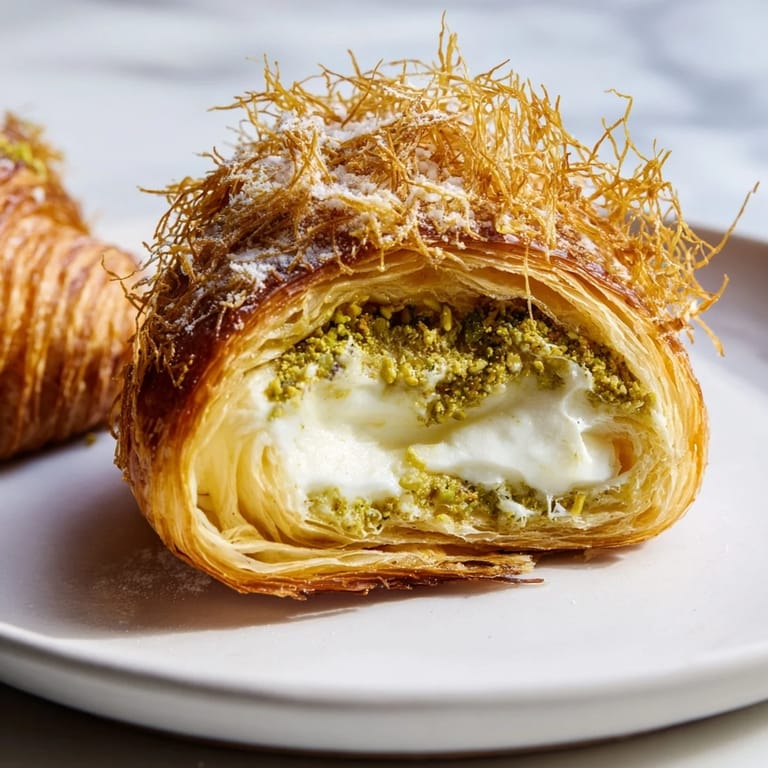
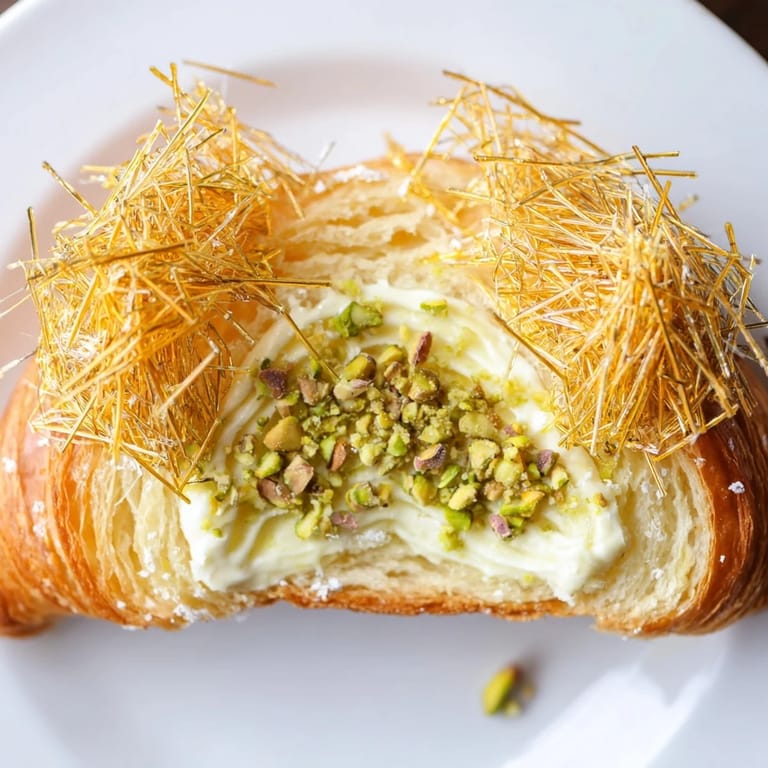
- Top each filled croissant with a small pile of phyllo shreds, then sprinkle chopped pistachios over the top. The phyllo will puff and crisp in the oven, and the pistachios will toast just enough to smell incredible.
- Bake until golden:
- Bake for 15–18 minutes; you're waiting for the phyllo to turn golden brown and the croissants to feel warm and crisp when you tap them. If the phyllo is browning too fast, lower the heat slightly—every oven runs a bit differently.
- Rest and serve:
- Let them cool for just a few minutes—long enough to hold without burning your mouth, but soon enough that the pistachio cream is still soft and luxurious inside.
 Save
Save There's a moment, right when they come out of the oven, where the smell hits you first—nutty, buttery, almost floral from the orange blossom water—and you realize this is one of those recipes that feels like an occasion even on a random Tuesday morning. My neighbor walked in unannounced while these were cooling, took one bite, and asked to become my tasting consultant for life.
Why Day-Old Croissants Actually Win
Fresh croissants sound like the better choice, but they're actually too delicate for filling and slicing. A day-old croissant has set enough that it holds its shape when you brush syrup into it, but still rewarmed perfectly in the oven so no one can tell it wasn't just baked. This is one of those baking secrets that changes everything once you know it.
The Phyllo Layer is Non-Negotiable
You could skip the phyllo and have a perfectly good pastry, but that crunchy, shattering top is what transforms this from nice to memorable. It adds texture contrast, visual drama, and that satisfying sound when you bite down. The phyllo isn't extra; it's the whole point.
Flavor Combinations That Make Sense
Pistachio works with orange blossom water the way coffee works with cream—they don't compete, they elevate each other. If you don't have orange blossom water, a tiny pinch of cardamom or a touch of lemon zest will do something equally magical without tasting like you're improvising.
- Pair these with strong espresso or even a dry Prosecco if it's that kind of morning.
- They keep in an airtight container for up to two days, though by day two they're better warmed in a low oven for five minutes to crisp up the phyllo.
- Double the recipe if you're serving them to anyone else—they disappear faster than you'd expect.
 Save
Save These croissants feel fancy enough for company but simple enough that you'll find yourself making them just for the pleasure of it. Once you've done it once, you'll know exactly how to do it again, and that's when baking stops feeling like following instructions and starts feeling like something you actually own.
Recipe FAQs
- → How do I make the pistachio cream smooth?
Use a food processor to finely grind pistachios with sugar, then blend with butter, egg, cream, and vanilla until creamy and smooth without lumps.
- → What is the purpose of the syrup inside the croissants?
The syrup moistens the croissant interiors, adding sweetness and a subtle floral note if orange blossom water is included, enhancing overall flavor.
- → Can I prepare the phyllo crunch ahead of time?
Yes, you can prepare and bake the phyllo shreds in advance and store them in an airtight container to maintain their crispness before topping.
- → What type of croissants works best?
Day-old all-butter croissants are preferred for better texture and easier slicing without crumbling.
- → Any tips for baking to achieve the perfect crispness?
Bake at 180°C until the phyllo topping turns golden and crisp and the croissants are warmed through; avoid overbaking to maintain flakiness.