 Save
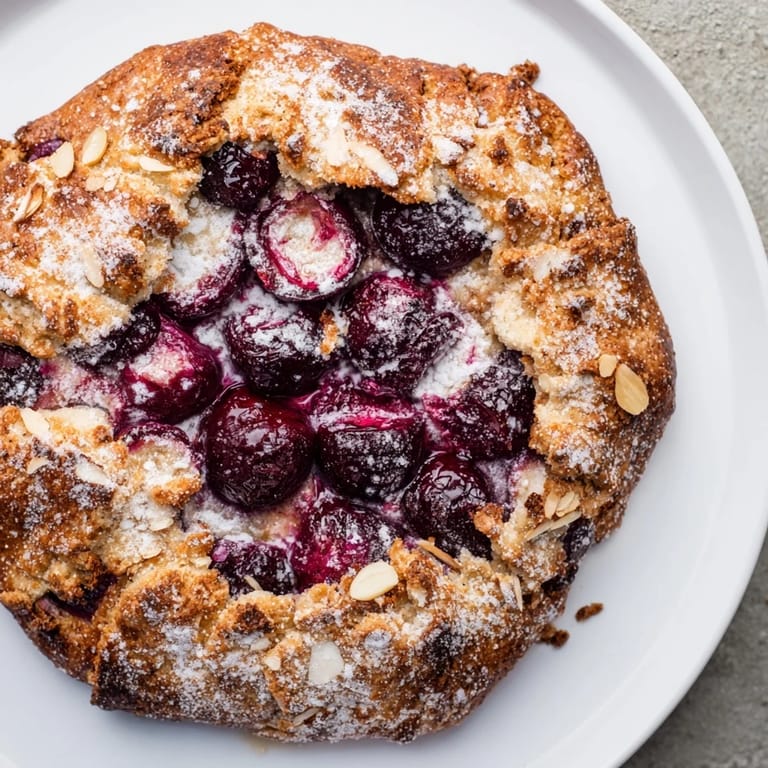
Save I baked my first galette on a whim one Saturday when I had too many cherries and not enough patience for a proper pie. The dough tore in three places as I folded it, but once it came out of the oven, all golden and slouchy, no one cared. That imperfect, rustic look became the whole point. Now I make this whenever I want something that tastes impressive but forgives every shortcut.
I brought this to a summer potluck once, still warm in the pan, and someone asked if I went to pastry school. I laughed and told them I learned it from a torn magazine page and a lot of trial and error. By the time I looked up, half the galette was gone. That night I realized rustic desserts have a kind of magic, they make people feel at home before they even take a bite.
Ingredients
- All-purpose flour: The backbone of the crust, I always spoon it into the cup and level it off so the dough stays tender, not tough.
- Almond flour: This quietly adds moisture and a hint of sweetness that complements the cherries without shouting.
- Cold unsalted butter: Cube it straight from the fridge and work fast, those little butter bits create the flaky layers you want.
- Ice water: Add it slowly, the dough should just barely come together or it will get sticky and hard to roll.
- Fresh sweet cherries: Halved and pitted, they release just enough juice to mingle with the sugar and cornstarch into a glossy filling.
- Granulated sugar: Sweetens both the crust and the fruit, I sometimes add an extra teaspoon if my cherries taste tart.
- Cornstarch: This thickens the cherry juices so they do not flood the crust, I learned that the hard way with a soggy bottom.
- Lemon juice: A bright splash that keeps the filling from tasting flat, it wakes up the fruit.
- Vanilla extract: Warm and familiar, it ties everything together like a quiet hum in the background.
- Almond extract: Optional but lovely, just a quarter teaspoon deepens the almond note without overwhelming.
- Egg for wash: Brushed over the crust, it bakes into a shiny golden finish that looks like you planned it all along.
- Sliced almonds: Scattered on top, they toast in the oven and add a gentle crunch.
- Coarse sugar: Turbinado or demerara sparkles on the crust and gives a sweet, crunchy contrast to the tender filling.
Tired of Takeout? 🥡
Get 10 meals you can make faster than delivery arrives. Seriously.
One email. No spam. Unsubscribe anytime.
Instructions
- Make the dough:
- Whisk the flours, sugar, and salt together, then work the cold butter in with your fingertips or a pastry cutter until it looks like damp sand with pea-sized lumps. Drizzle in ice water one tablespoon at a time, stirring gently until the dough just holds together when you pinch it.
- Chill the disk:
- Pat the dough into a flat round, wrap it tightly, and let it rest in the fridge for 30 minutes. This firms up the butter and makes rolling so much easier.
- Prep the oven and pan:
- Heat your oven to 400°F and line a baking sheet with parchment. This keeps the galette from sticking and makes cleanup a breeze.
- Toss the filling:
- Combine the cherries, sugar, cornstarch, lemon juice, vanilla, and almond extract in a bowl, stirring until every piece is coated. The mixture will look a little dry at first, but it comes together as it bakes.
- Roll and transfer:
- On a floured surface, roll the chilled dough into a rough 12-inch circle, do not stress about perfect edges. Carefully slide it onto your prepared pan.
- Build the galette:
- Spoon the cherry mixture into the center, leaving a 2-inch border all around. Fold the edges up and over the fruit, pleating as you go, the folds do not need to match.
- Finish and bake:
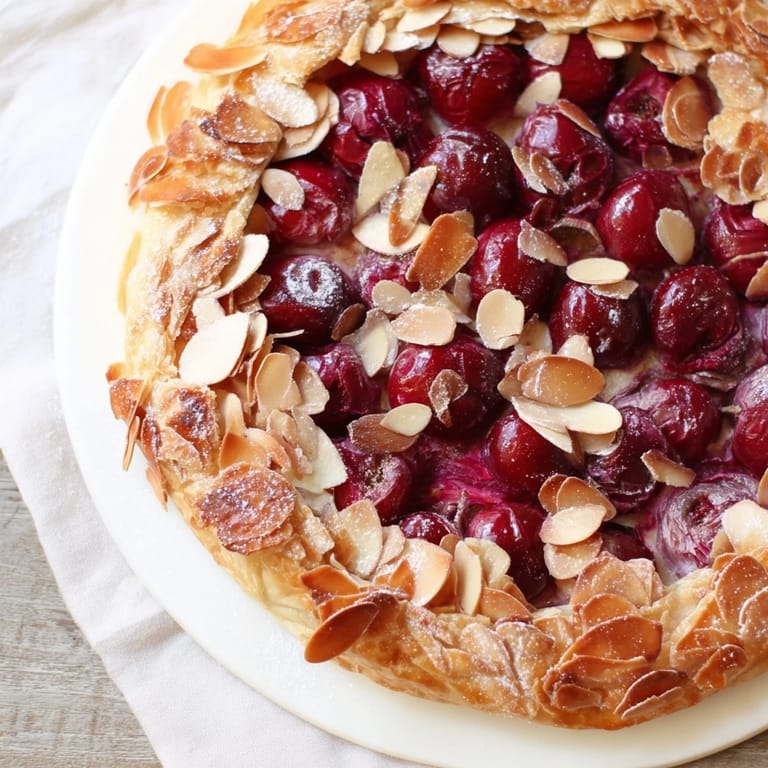
- Brush the crust with beaten egg, then scatter sliced almonds and coarse sugar over the top. Bake for 35 to 40 minutes, until the crust is deeply golden and the filling bubbles thickly in the center.
 Save
Save One evening I served this still-warm galette with a scoop of melting vanilla ice cream, and my friend closed her eyes after the first bite. She said it tasted like the kind of dessert you only get at a farmhouse table in the countryside. I did not tell her I made it in my tiny apartment kitchen with a wobbly rolling pin. Sometimes the feeling matters more than the story.
Choosing Your Cherries
I prefer fresh sweet cherries because they hold their shape and do not need much sugar, but sour cherries work beautifully if you add an extra tablespoon or two of sugar to balance the tang. If you are using frozen cherries, thaw them completely and drain off the excess liquid before tossing with the cornstarch, or the filling will turn soupy. I once skipped that step and ended up with a puddle in the center, it still tasted good but looked like a mess.
Making It Your Own
This galette is endlessly adaptable, I have swapped in blueberries, sliced plums, and even a mix of peaches and raspberries depending on what looked good at the market. The key is to keep the total fruit weight around 400 grams and adjust the sugar to taste. I also tried adding a tablespoon of orange zest once, and it gave the whole thing a bright, sunny lift that everyone loved.
Serving and Storing
I love serving this warm or at room temperature, straight from the pan with a dollop of whipped cream or a scoop of ice cream on the side. Leftovers keep in the fridge for up to three days, covered loosely with foil, and they are just as good cold for breakfast with coffee. If you want to reheat a slice, a few minutes in a 350°F oven brings back that crisp crust without drying it out.
- Brush the crust with non-dairy milk instead of egg wash for a vegan version, it still bakes up beautifully golden.
- Sprinkle a pinch of cinnamon or cardamom into the filling for a warm, spiced twist.
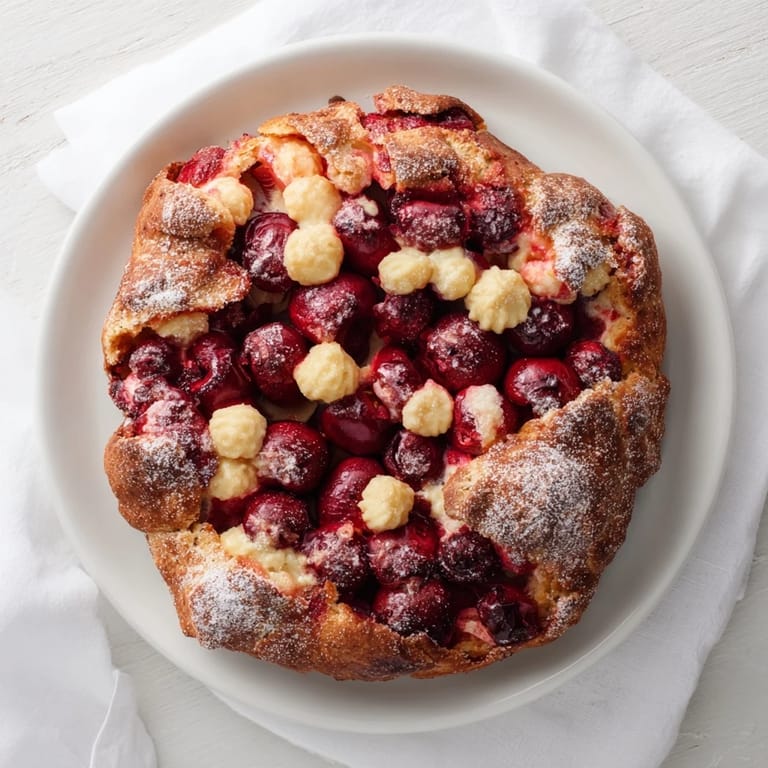
- Do not worry if the galette looks messy, that is the whole charm of it.
 Save
Save This galette has become my go-to whenever I want to bake something that feels special without the pressure of perfection. Every wrinkle and fold tells the story of a dessert made with real hands, and that is always worth celebrating.
Recipe FAQs
- → How do I make the crust flaky and tender?
Use cold unsalted butter cut into the flour mixture until crumbly, and add ice water gradually to bind without overworking the dough. Chill before rolling out for best results.
- → Can I substitute almond flour in the crust?
Yes, almond flour adds a subtle nutty flavor and tenderness, but you can replace it with extra all-purpose flour for a more traditional texture.
- → What is the purpose of folding the dough edges over the fruit?
Folding creates a rustic border that contains the filling while leaving the center exposed to bake evenly and develop a crisp edge.
- → How can I prevent a soggy bottom crust?
Chilling the dough before baking and using cornstarch in the filling helps absorb excess juice, minimizing sogginess.
- → Are there recommended variations for the filling?
Try mixing cherries with other summer berries or plums, and adjust sugar levels based on fruit sweetness to customize flavors.