 Save
Save The first time I made a pizza without flour, I was skeptical, honestly. My kitchen counter was covered with recipe printouts and half-empty spice jars when I decided to press seasoned ground beef into a baking sheet instead of kneading dough. Twenty-five minutes later, golden and bubbling, it completely changed how I thought about pizza night. This ground beef base became my answer to cravings that didn't fit the usual carb-heavy routine, and somehow it tasted even more satisfying.
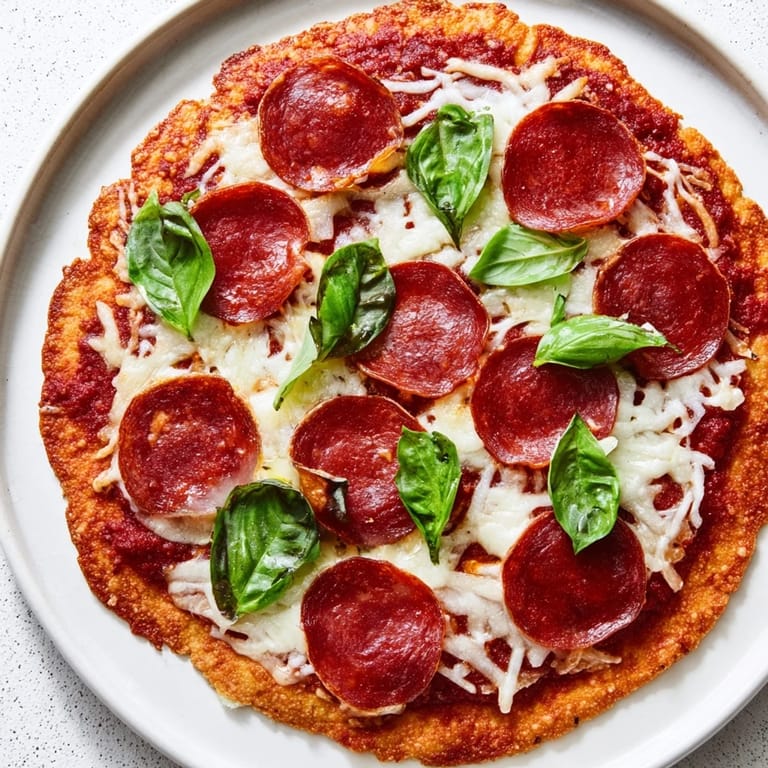
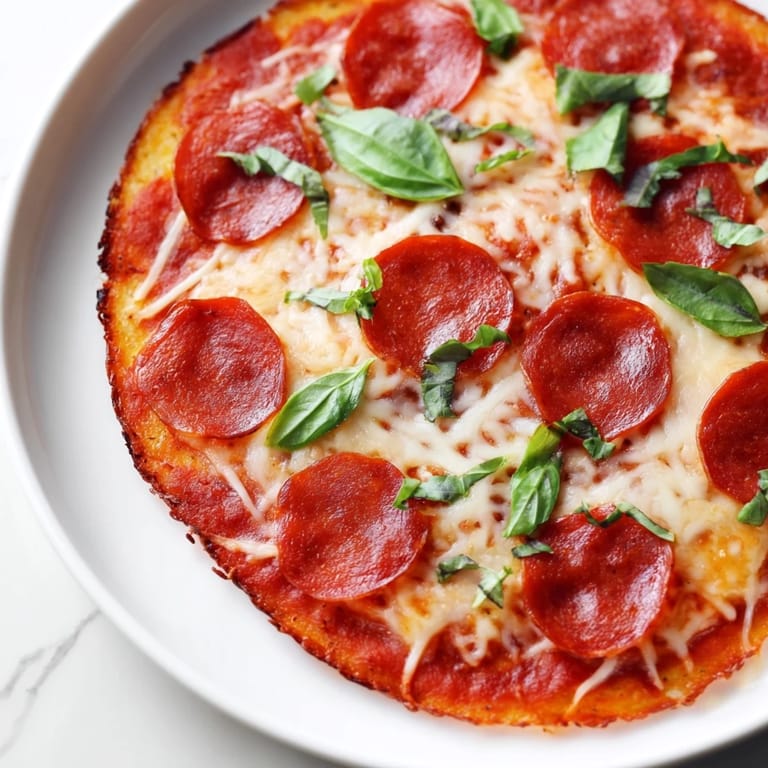
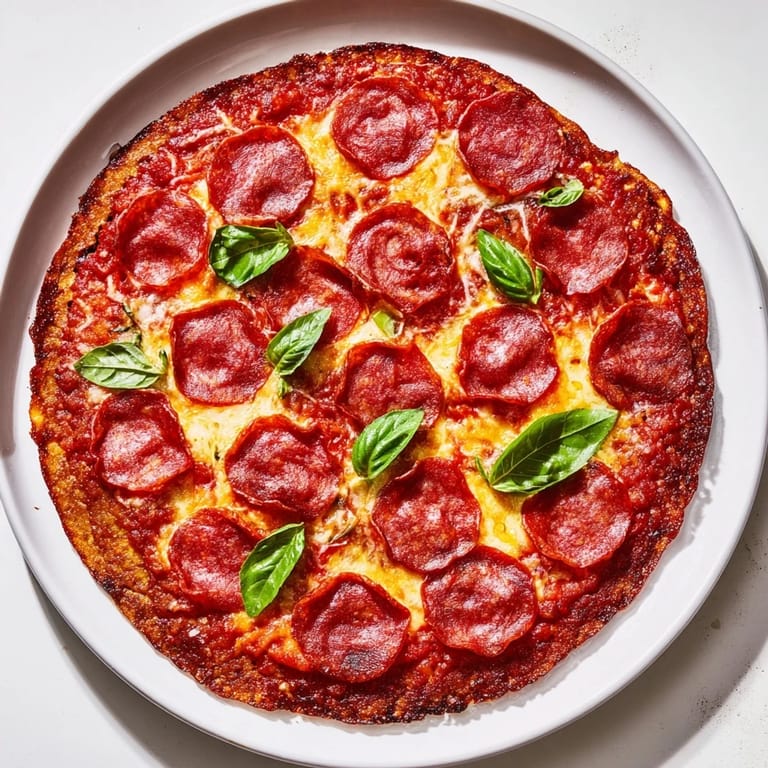
I made this for my sister who was experimenting with low-carb eating, and she came back into the kitchen three times asking how I'd done it. The pepperoni got slightly crispy in the edges, the cheese pooled into little golden pools, and when she bit into that beef crust, her face just lit up. That's when I knew this wasn't just a dietary workaround—it was genuinely delicious.
Ingredients
- Ground beef (500 g): Use lean or regular; it won't matter much since fat drains off anyway, but lean feels lighter and less greasy afterward.
- Egg: This is your binder, the only thing holding the whole thing together, so don't skip it or substitute.
- Parmesan cheese (2 tbsp): Adds a nutty bite that makes the beef taste less like a burger and more like something special.
- Garlic and onion powder (1 tsp each): Fresh garlic and onion burn at high heat, but these powders stay mellow and distributed throughout.
- Dried oregano and basil (1 tsp each): The herbs that make it taste like pizza, not meatloaf—don't use fresh here.
- Salt and pepper: Season generously; the beef needs it.
- Mozzarella (120 g): Shred it yourself if you can; pre-shredded has anti-caking agents that sometimes make it stringy.
- Pepperoni (60 g): Sliced, not chunks—they cup up slightly and get crispy at the edges.
- Pizza sauce (120 ml): Use a sugar-free version if you're counting carbs; otherwise, any pizza sauce works.
Tired of Takeout? 🥡
Get 10 meals you can make faster than delivery arrives. Seriously.
One email. No spam. Unsubscribe anytime.
Instructions
- Heat the oven and prep your pan:
- Set your oven to 220°C (425°F) and line a baking sheet with parchment paper so the beef doesn't stick and you don't have a nightmare cleanup. This temperature is hot enough to crisp the edges without drying out the center.
- Mix the beef base:
- Combine the ground beef, egg, Parmesan, garlic powder, onion powder, oregano, basil, salt, and pepper in a large bowl. Mix with your hands until just combined—overworking makes it dense and tough, like you're making meatballs instead of a pizza base.
- Shape into a crust:
- Transfer the mixture to your prepared baking sheet and pat it into a 30 cm round about 1 cm thick, with a slight raised edge all around to hold the toppings. Think of it like building a shallow well that keeps the sauce from running off.
- Bake the base:
- Bake for 12–15 minutes until browned and set but not hard. You're looking for that moment when the edges smell intensely savory and the surface looks cooked through. Carefully pour off any excess fat—there usually isn't much if you used lean beef, but it makes a difference.
- Add toppings:
- Spread the pizza sauce evenly over the beef base, then scatter the mozzarella and arrange pepperoni slices on top. Don't be shy with the cheese; it melts into all the little cracks.
- Finish in the oven:
- Bake for another 8–10 minutes until the cheese is melted and bubbly and the pepperoni edges are slightly curled and crisp. Let it rest for 2–3 minutes before slicing—it helps it hold together.
- Serve:
- Slice, garnish with fresh basil if you like, and eat it while the cheese is still warm.
 Save
Save One evening, I made this for friends who were all trying different diets, and somehow this one pizza brought everyone to the table without anyone asking questions or worrying about what they were eating. Nobody mentioned carbs or macros—they just asked for another slice.
Why This Works Instead of Regular Pizza
The beef base has this naturally crispy exterior that you'd struggle to get with dough, even if you baked it twice. It browns quickly, stays sturdy when you add wet toppings, and tastes savory and substantial in a way that feels more indulgent than lighter alternatives. The whole thing comes together so fast that you're not tempted to order out, and your kitchen doesn't smell like deep-fried dough—it smells like an upscale pizzeria.
Customizing Your Toppings
The beauty of this base is that it stands up to almost anything. If you're adding wet vegetables like mushrooms or peppers, pat them dry first so they don't release moisture and soften the crust. Swap pepperoni for sautéed sausage if you want something earthier, or load it with roasted vegetables and skip the meat for a vegetarian version. Even leftover cooked chicken works—treat it like a white pizza with ricotta and spinach.
Serving and Storage Tips
This pizza is best eaten fresh and warm, but it keeps well in the refrigerator for up to three days. Reheat it in a 180°C oven for 5–8 minutes to restore the crispness; the microwave will make it rubbery. Pair it with a crisp green salad or roasted vegetables on the side to round out the meal, and if you're feeling adventurous, sprinkle crushed red pepper flakes on top before the second bake for heat.
- Let it rest those 2–3 minutes—it helps everything set and makes slicing cleaner.
- If you're meal prepping, cool it completely before wrapping and refrigerating.
- A squeeze of lemon juice over fresh basil just before serving brightens the whole thing.
 Save
Save This dish proved to me that the best recipes aren't the ones that follow all the rules—they're the ones that break them and taste even better. Once you make this, you'll understand why pizza night never needs to look the same twice.
Recipe FAQs
- → How do I prevent the beef crust from falling apart?
Mix the beef gently with egg and Parmesan to bind it well. Avoid overmixing to keep a tender texture but ensure it holds shape while baking.
- → Can I use different herbs for seasoning the crust?
Yes, feel free to substitute or add herbs like thyme, rosemary, or parsley to customize the flavor profile of the crust.
- → What’s the best way to drain excess fat after baking?
Remove the crust from the oven and carefully tilt the baking sheet to drain fat onto a paper towel or disposable container before adding toppings.
- → Are there suitable toppings to complement the beef base?
Mozzarella and pepperoni are classic choices, but sautéed vegetables, mushrooms, or cooked sausage can enhance the savory elements.
- → Can this method be adapted for dietary preferences?
Absolutely. For vegetarian options, substitute the beef base with a plant-based alternative and use vegetable toppings to suit diet needs.