 Save
Save The first time I made manti, I was standing in a tiny Istanbul kitchen on a rainy afternoon, watching my neighbor's hands move with such practiced ease that the tiny dumplings seemed to form themselves. She didn't measure anything—just a pinch here, a fold there—and suddenly I understood that these weren't complicated at all, just patient. Years later, when I finally recreated them in my own kitchen, I remembered that feeling of calm precision, and how something so delicate could be so forgiving. Now they're the dish I make when I want to slow down and actually taste what I'm eating.
I made these for my partner on a Tuesday night when neither of us had the energy for takeout, and something clicked—the way the yogurt pooled around each dumpling, how the paprika-butter glistened under the kitchen light, the sound of the fork hitting the plate. It wasn't fancy, but it felt like it was, and that's when I knew this recipe belonged in the regular rotation.
Ingredients
- All-purpose flour: The foundation—two cups makes enough dough for four generous servings, and it needs to be sturdy enough to hold the filling without tearing.
- Salt (1/2 teaspoon for dough): Just enough to season the dough itself; the filling and sauces add more seasoning later.
- Large egg: Binds everything together and adds richness to the dough without making it heavy.
- Water: Start with 1/2 cup and add more by the tablespoon if your dough is too stiff—humidity matters here.
- Turkish white cheese or feta: Creamy, salty, and slightly tangy—this is what makes the filling sing. Feta works beautifully if Turkish cheese isn't available.
- Ricotta cheese: Mellows out the sharpness of the feta and keeps the filling tender and spreadable.
- Fresh parsley: Chopped fine, it brightens everything and gives you little green flecks throughout.
- Black pepper: Just 1/4 teaspoon, but it matters—don't skip it.
- Greek yogurt: Thick and tangy, the perfect base for the cooling sauce that balances all those warm spices.
- Garlic clove: One is enough; mince it fine so it distributes evenly without overpowering.
- Unsalted butter: Three tablespoons get infused with spices and drizzled over everything—this is where the magic happens.
- Paprika and Aleppo pepper: The paprika adds color and mild sweetness, while the Aleppo pepper (or chili flakes) brings a subtle heat that lingers.
Tired of Takeout? 🥡
Get 10 meals you can make faster than delivery arrives. Seriously.
One email. No spam. Unsubscribe anytime.
Instructions
- Make the dough:
- Combine flour and salt in a large bowl, then make a well in the center like you're building a little flour volcano. Crack the egg into the middle, add half the water, and start mixing from the center outward, pulling flour in gradually. The dough will look shaggy at first—keep going, adding water a tablespoon at a time until everything comes together into a soft, smooth mass. Knead for a few minutes until it feels elastic and a tiny bit springs back when you poke it.
- Rest the dough:
- Cover the bowl with a damp towel and let it sit for 20 minutes on the counter. This isn't just waiting time; the gluten is relaxing, which means your dough will be easier to roll thin without tearing.
- Prepare the filling:
- While the dough rests, crumble the Turkish cheese into a bowl with the ricotta, then fold in the parsley and pepper. Taste it—you're looking for that balance between salty and creamy, with just enough green pepper to notice.
- Make the yogurt sauce:
- Stir the minced garlic into the Greek yogurt with a pinch of salt until it's completely smooth. Set it aside in a cool spot—this sauce works best when it's cold against warm dumplings.
- Roll and cut the dough:
- Dust your work surface lightly with flour, then roll the dough as thin as you can—you want it almost transparent, around 2 mm. Don't stress if it's not perfect; use a sharp knife or pastry cutter to cut it into rough 1.5-inch squares, and don't worry about the scraps—you can gather and re-roll them.
- Fill and fold:
- Place a tiny amount of cheese filling (about 1/2 teaspoon) in the center of each square, then pinch all four corners together above the filling to seal it into a little purse. The dumplings should be small enough to eat in one or two bites.
- Cook the manti:
- Bring a large pot of salted water to a rolling boil, then add the dumplings in batches so they have room to float. They're done when they rise to the surface and look tender, usually 5 to 7 minutes—they should feel soft when you pierce one with a fork, not at all doughy.
- Make the spiced butter:
- Melt the butter in a small pan over medium heat, then stir in the paprika and Aleppo pepper. Let it warm through for about 30 seconds until it smells incredible, then turn off the heat so the spices don't burn.
- Plate and serve:
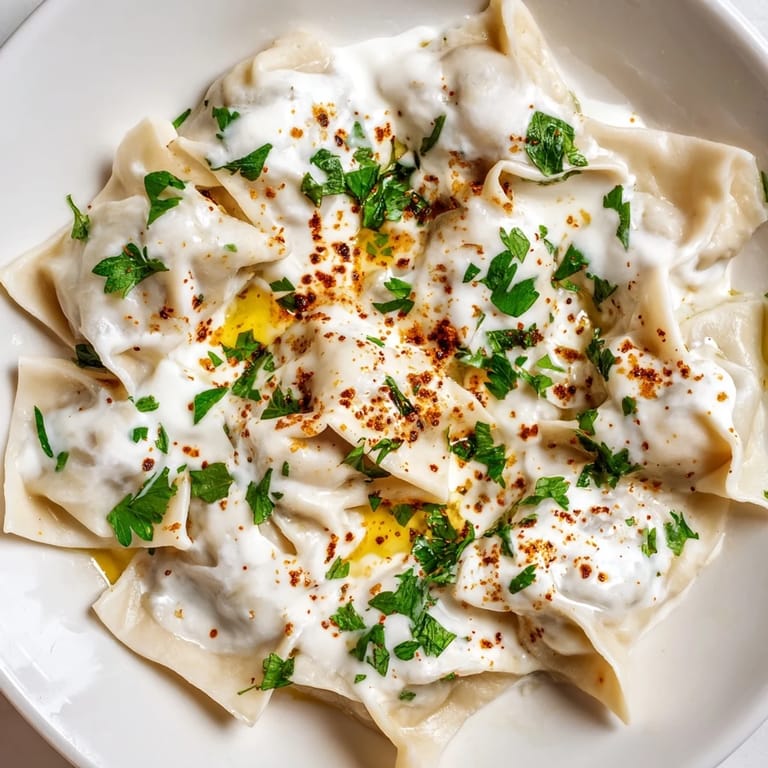
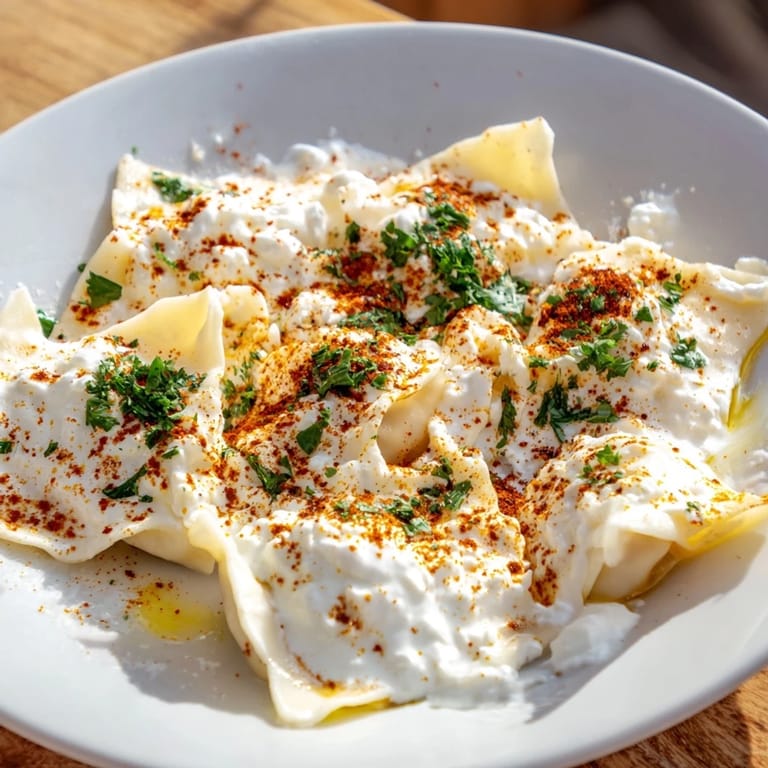
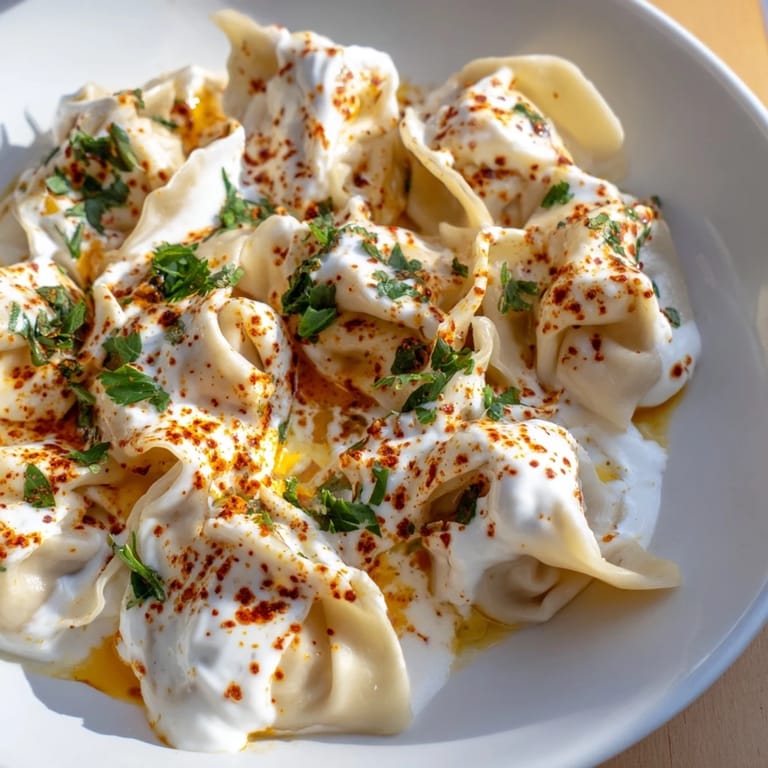
- Drain the cooked manti well, then arrange them on plates. Spoon the cold yogurt sauce over the top, drizzle with the spiced butter while it's still warm, and add a little fresh parsley if you have it—the green looks beautiful against the creamy and golden colors.
 Save
Save There's a moment when the spiced butter hits the cold yogurt and everything shimmers together on the plate, and that's when you know you've got it right. It's not complicated, but it's elegant in that understated way that makes you feel proud of yourself for about five minutes.
The Dough That Holds Everything Together
Getting the dough right is 90% of this dish, and the good news is that it's forgiving once you understand what you're doing. The key is hydration—too dry and it tears when you roll it, too wet and it sticks to everything. After the first time, you'll develop a feel for it, and you'll start adding water by touch rather than measurement. I've made batches where I added almost double the water because of humidity, and batches where I didn't need it all. The resting period matters more than you'd think; it's what makes the difference between dough that fights you and dough that cooperates.
Why the Cheese Filling Works
The combination of feta and ricotta is actually genius because it does two things: the feta brings the flavor and saltiness, while the ricotta keeps everything tender and spreadable. On its own, feta would be too sharp and crumbly, but together they're balanced and luxurious. I've tried using only one or the other, and the dumplings always feel like something's missing. The parsley isn't just garnish—it's a flavor component that cuts through the richness and keeps things feeling fresh.
Building Layers of Temperature and Texture
What makes manti special is that you're eating three different temperatures at once: the warm dumplings, the cold yogurt, and the warm butter. They all melt together and create something that's way more interesting than any single component. The cold yogurt also provides a sharp tang that balances the richness of the cheese and butter, so every bite feels complete. If you serve everything warm, it becomes heavy and one-note, and if it's all cold, you lose the comfort factor.
- Don't skip the spiced butter—it's not decoration, it's essential to how the dish tastes and feels.
- If Aleppo pepper is hard to find, regular chili flakes work, but use a little less because they're spicier.
- Make the dumplings ahead and refrigerate them for up to eight hours before cooking—it actually makes them easier to handle.
 Save
Save This is the kind of dish that reminds you why cooking matters; it's not about impressing anyone, it's about creating those little moments where food tastes exactly right. Make it for someone you want to slow down with.
Recipe FAQs
- → What cheeses work best for the filling?
Combining Turkish white cheese or feta with ricotta creates a creamy, slightly tangy filling that balances well with herbs and spices.
- → How thin should the dough be rolled?
Roll the dough about 2 millimeters thin to ensure dumplings cook evenly and achieve a delicate texture.
- → Can I prepare the dumplings ahead of time?
Yes, you can assemble the dumplings and refrigerate them briefly before cooking to help them hold their shape better.
- → How is the yogurt sauce seasoned?
Mix plain Greek yogurt with minced garlic and a pinch of salt to create a refreshing and mildly tart sauce.
- → What adds the final flavor touch to the dish?
Melting butter with paprika and Aleppo pepper and drizzling it over the dumplings adds a fragrant, mildly spicy finish.
- → Are there suggested garnishes to enhance the dish?
A sprinkle of freshly chopped parsley or a pinch of sumac or dried mint adds color and a subtle aroma.