 Save
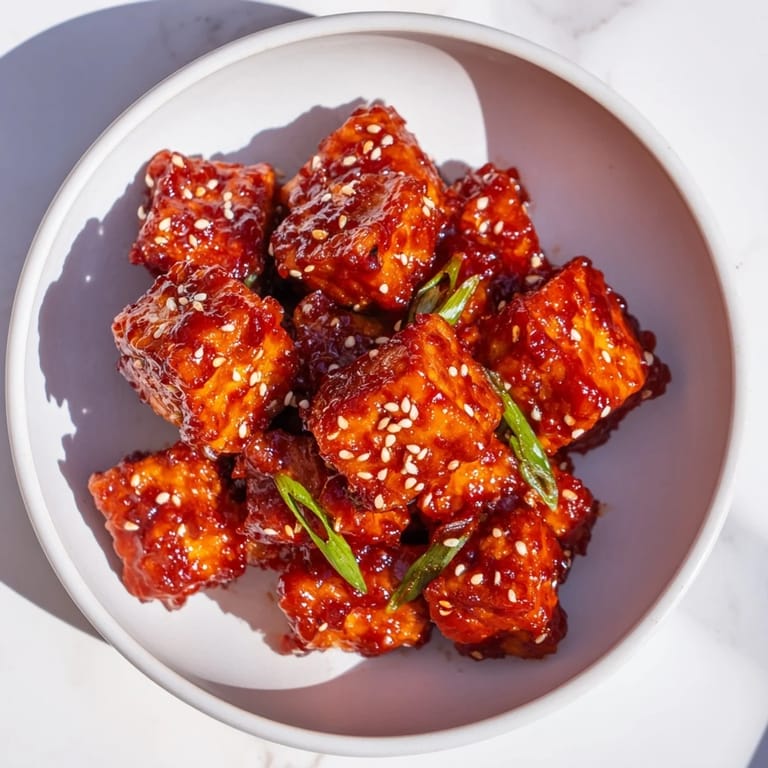
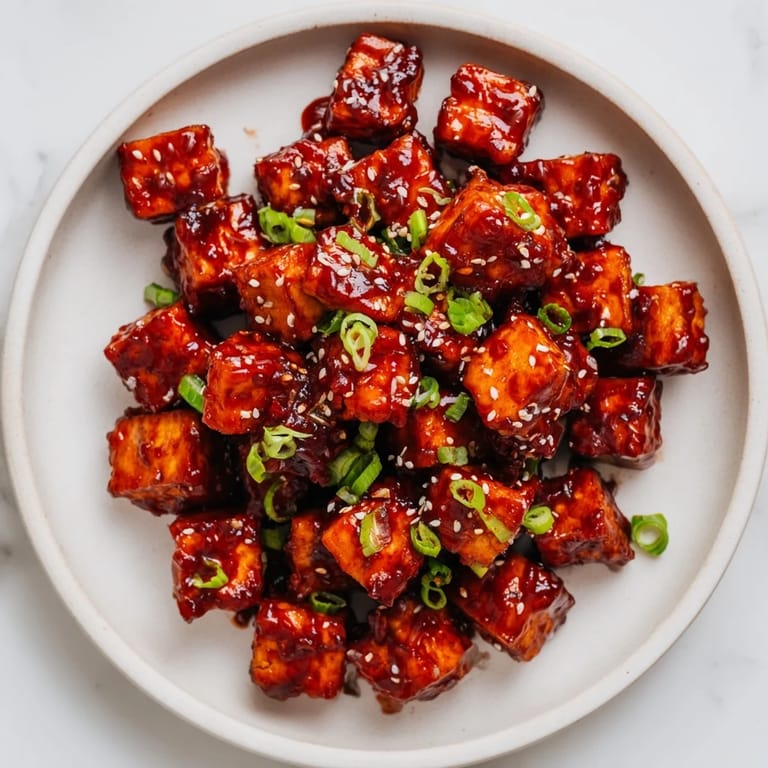
Save I discovered honey gochujang tofu by accident one weeknight when I was staring at a block of firm tofu and a jar of gochujang that my neighbor had gifted me months ago. I had no idea what to do with either, honestly, but I decided to crisp up the tofu and see what happened when I mixed the chili paste with honey. The kitchen filled with this incredible aroma—sweet, spicy, a little funky—and by the time those golden cubes were glazed and sticky, I knew I'd stumbled onto something special.
The first time I made this for friends, I served it as an appetizer with cold beer, and they couldn't stop eating it—someone even asked for the recipe before they'd finished the plate. I realized then that good food doesn't need to be complicated or take hours; it just needs to hit you with flavor and texture in a way that makes you pause mid-conversation.
Ingredients
- Firm tofu, 400 g (14 oz), pressed and cubed: Pressing removes water that would otherwise steam the tofu instead of crisping it; don't skip this step even though it feels tedious.
- Cornstarch, 2 tbsp: This is your secret weapon for getting those crispy, golden edges that make the dish feel less virtuous than it actually is.
- Salt, 1/2 tsp: Seasons the tofu before cooking and helps draw out remaining moisture.
- Neutral oil, 2 tbsp: Use canola or sunflower oil; olive oil's smoke point is too low and will taste bitter.
- Gochujang (Korean chili paste), 2 tbsp: This fermented paste brings depth and spice; find it in the Asian section or online and don't settle for substitutes if you can help it.
- Honey, 2 tbsp: Balances the heat and creates that glossy, sticky finish; maple syrup works if you need vegan.
- Soy sauce, 1 tbsp: Adds umami saltiness that ties everything together.
- Rice vinegar, 1 tbsp: A touch of brightness cuts through the richness and keeps the sauce from feeling one-dimensional.
- Sesame oil, 1 tbsp: Use pure sesame oil, not the infused kind; a little goes a long way in flavor.
- Garlic and ginger, 2 cloves and 1 tsp: Freshly minced and grated—they wake up the sauce and add warmth.
- Water, 2 tbsp: Helps the sauce coat the tofu without becoming too thick or sticky.
- Toasted sesame seeds and green onions for garnish: These add texture and freshness that make the final dish feel finished and intentional.
Tired of Takeout? 🥡
Get 10 meals you can make faster than delivery arrives. Seriously.
One email. No spam. Unsubscribe anytime.
Instructions
- Press your tofu patiently:
- Wrap the block in a clean kitchen towel or paper towels, place it on a plate, and weight it down with something heavy—a cast iron pan, a stack of books, whatever you have. Let it sit for at least 10 minutes while you gather your other ingredients and mentally prepare yourself for crispy tofu. The drier your tofu, the crispier it gets.
- Coat and prep the cubes:
- Cut the pressed tofu into roughly 2 cm (3/4 inch) cubes and toss them in a bowl with cornstarch and salt until every piece is evenly dusted. This coating is what creates those golden, crackling edges.
- Get the pan hot and crispy:
- Heat your oil in a large non-stick skillet over medium-high heat until it shimmers and moves easily around the pan. Add the tofu cubes and let them sit undisturbed for 2 to 3 minutes before turning—you want that golden crust to develop, not a steamed surface. Keep turning every few minutes until all sides are crispy and golden, about 8 to 10 minutes total. You'll know it's done when the cubes are well-colored and smell nutty.
- Make the sauce while the tofu crisps:
- In a small bowl, whisk together gochujang, honey, soy sauce, rice vinegar, sesame oil, minced garlic, grated ginger, and water until smooth and well combined. There's no cooking here—just whisking—and it takes about a minute.
- Simmer the sauce to thicken:
- Pour the sauce into the same skillet (don't bother washing it; those browned bits add flavor) and bring it to a gentle simmer over medium heat. Let it bubble quietly for 2 to 3 minutes, stirring occasionally, until it thickens slightly and coats the back of a spoon.
- Toss the tofu in the glaze:
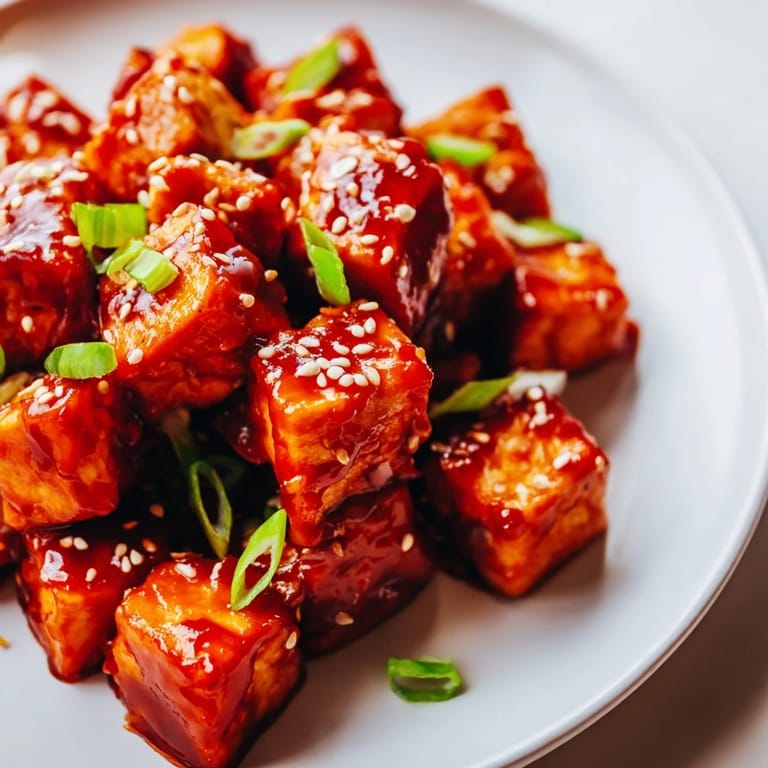
- Return the crispy tofu cubes to the skillet and toss everything together until every piece is coated in that sticky, glossy sauce. Cook for another minute or two just to let the tofu warm through and the flavors marry together.
- Finish with garnish and serve:
- Transfer to a serving plate and scatter toasted sesame seeds and sliced green onions over the top. Serve hot on its own, over steamed rice, or however feels right to you in that moment.
 Save
Save There's something magical about watching someone taste this for the first time and see their face light up—that moment when they realize tofu can be crispy and interesting and addictive. It's the kind of dish that shifts people's opinions about plant-based cooking.
Why This Dish Works
The beauty of honey gochujang tofu lies in its balance and simplicity. Gochujang brings heat and fermented depth, honey adds sweetness and creates that sticky glaze, and the crispy tofu cubes give you texture that makes the whole thing feel substantial. It's the kind of dish that tastes like you spent hours in the kitchen when really you were done in less than 40 minutes. The sauce clings to every cube, every bite is consistent, and there's almost no waste—just pure flavor and satisfaction.
Serving and Pairing Ideas
This dish shines on its own as an appetizer with drinks, but it's equally at home spooned over fluffy steamed rice or nestled into lettuce wraps for something lighter. I've served it at room temperature with cucumber slices and sesame crackers, and I've also added it to grain bowls with quinoa, roasted vegetables, and a squeeze of lime. The sauce is forgiving enough to pair with almost anything, and spicy enough to hold its own against bold flavors like garlic, scallions, and pickled vegetables.
Making It Your Own
Once you nail the basic formula, this recipe becomes a playground for improvisation. Want it spicier? Add more gochujang or a pinch of red pepper flakes. Prefer it less sweet? Cut the honey back to 1 tablespoon or use a savory sweetener like mirin. You can stretch the dish by adding steamed broccoli or sautéed bell peppers in the final toss, or top it with crushed peanuts and cilantro for an entirely different vibe. I've even made it with a splash of orange juice instead of water for brightness, and it was wonderful.
- Maple syrup or agave work perfectly if you're cooking vegan and don't have honey on hand.
- Leftovers keep in the fridge for three days and actually taste better cold straight from a container.
- Double the sauce if you like it extra glossy; the ratios are flexible and forgiving.
 Save
Save This recipe lives in the sweet spot between weeknight comfort and company-worthy elegance, and I find myself making it again and again because it never gets old. Whether you're cooking for yourself or feeding a crowd, honey gochujang tofu delivers.
Recipe FAQs
- → What type of tofu works best?
Firm tofu pressed to remove moisture holds its shape well and crisps nicely when coated and pan-fried.
- → Can I adjust the spice level?
Yes, alter the amount of gochujang used to suit your preferred heat intensity.
- → What are good serving suggestions?
Serve the glazed tofu over steamed rice, quinoa, or in lettuce wraps for added texture and freshness.
- → How do I make it vegan-friendly?
Replace honey with maple syrup or agave nectar to maintain sweetness while keeping it plant-based.
- → What garnishes enhance the dish?
Toasted sesame seeds and thinly sliced green onions add crunch and a fresh, aromatic touch.