 Save
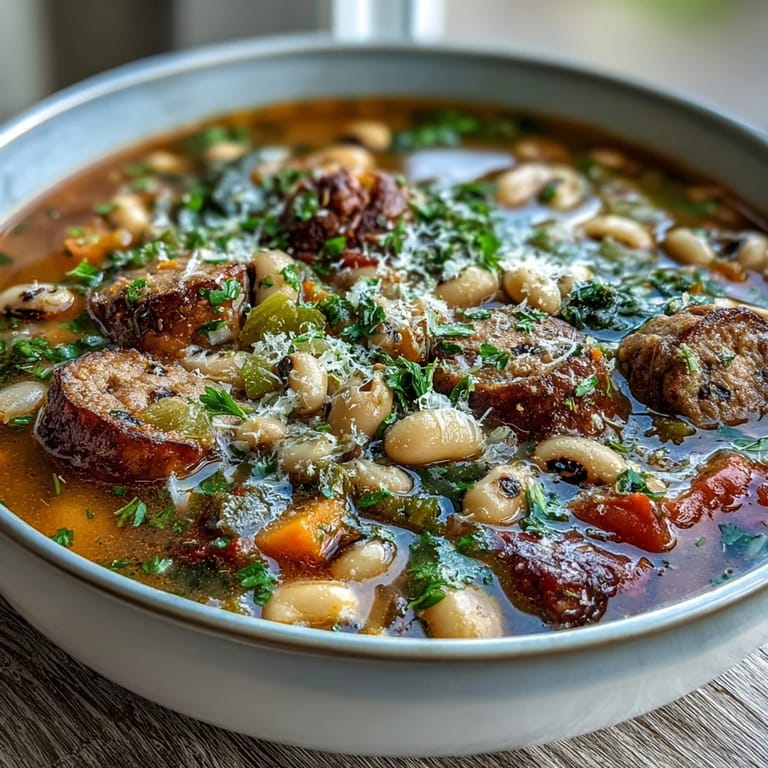
Save There's something about the smell of Italian sausage hitting a hot pot that makes me stop what I'm doing and just breathe it in. My neighbor dropped off a bag of fresh sausages one autumn afternoon, and I had black-eyed peas sitting in my pantry, so this soup practically invented itself. It became the kind of dish I make when the weather turns cool and I want something that feels both comforting and a little bit special, without any fuss.
I served this to my book club on a Wednesday night when I'd promised to bring soup but forgotten until that morning. Everyone came back for seconds, and someone asked if there was a secret ingredient, which made me laugh because the secret was really just using good sausage and not overthinking it. It became the soup I make whenever I need to feed people without the anxiety.
Ingredients
- Italian sausage (450 g / 1 lb): The backbone of this soup—remove it from the casings and let it brown until it's deeply golden, which takes about five to seven minutes and fills your kitchen with an aroma that's impossible to ignore.
- Yellow onion (1 medium, diced): Start here after the sausage is cooked; it's the aromatic foundation that softens and sweetens as it sits in the rendered fat.
- Carrots (2, peeled and sliced): They add natural sweetness and body to the broth, plus they stay tender enough to feel satisfying when you bite into them.
- Celery stalks (2, sliced): This is the quiet workhorse that brings savory depth without announcing itself.
- Garlic (3 cloves, minced): Add it with the other vegetables so it softens gently and releases its flavor into the pot rather than browning and turning bitter.
- Red bell pepper (1, diced): It brightens the soup with sweetness and color, and it stays just firm enough to notice.
- Diced tomatoes (1 can, 400 g / 14 oz, with juices): Don't drain them—those juices carry flavor and acidity that balances the richness of the sausage.
- Black-eyed peas (2 cans, 400 g / 14 oz each, drained and rinsed): Rinsing them removes excess sodium and any tinny taste, leaving them clean and ready to absorb the broth.
- Low-sodium chicken broth (1.25 liters / 5 cups): Use broth you'd actually drink on its own, because it's the liquid canvas for everything else.
- Dried thyme (1 tsp): It brings an earthy, slightly mineral note that feels authentic to Italian-Southern fusion.
- Dried oregano (1 tsp): This is where the Italian character comes in; it's warm and a little bit herbaceous.
- Bay leaf (1): It simmers quietly in the background and should be removed before serving—I learned that the hard way once.
- Crushed red pepper flakes (½ tsp, optional): Use them if you like heat that builds slowly rather than hits you at the start.
- Salt and black pepper (to taste): Season at the end when you can taste what you're actually working with.
- Fresh parsley (2 tbsp, chopped, for garnish): It adds brightness and a tiny bit of freshness that cuts through the richness.
- Grated Parmesan cheese (optional, for serving): It's not necessary, but it adds a savory, umami quality if you want it.
Tired of Takeout? 🥡
Get 10 meals you can make faster than delivery arrives. Seriously.
One email. No spam. Unsubscribe anytime.
Instructions
- Brown the sausage and clear the stage:
- In a large soup pot or Dutch oven over medium heat, crumble the sausage with the back of a wooden spoon as it cooks, breaking it into small pieces and letting it turn golden brown for five to seven minutes. If there's a pool of fat at the bottom when it's done, tilt the pot and spoon some of it off—you want flavor, not grease.
- Build your aromatic base:
- Add the onion, carrots, celery, bell pepper, and garlic to the pot with the sausage and let them soften for about five minutes, stirring occasionally so they pick up all those browned bits stuck to the bottom. The kitchen will smell incredible at this point.
- Add the liquid and seasonings:
- Pour in the canned tomatoes with their juices, then add the drained black-eyed peas, chicken broth, thyme, oregano, bay leaf, and red pepper flakes if you're using them. Stir everything together so nothing sticks to the bottom and the flavors start mingling.
- Simmer gently until everything softens:
- Bring the soup to a gentle boil, then turn the heat down to low, cover the pot, and let it simmer for about twenty minutes, stirring occasionally. You're not trying to break anything down; you're just letting the flavors marry and the vegetables finish cooking through.
- Taste and adjust:
- Remove the bay leaf, then taste the soup and add salt and black pepper until it tastes like something you actually want to eat. Sometimes a pinch of salt makes all the difference between good and unforgettable.
- Serve and garnish:
- Ladle the soup into bowls and scatter some fresh parsley on top—the green looks beautiful and tastes fresh. If you want Parmesan, grate it right at the table so everyone can add as much as they like.
 Save
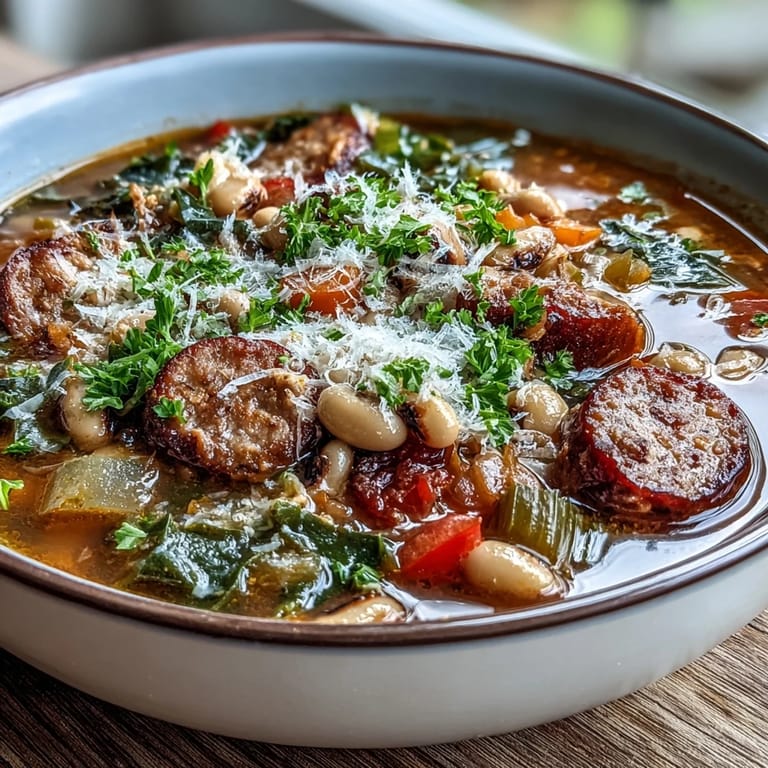
Save My mother made black-eyed peas and sausage once for New Year's Day, though not as a soup, and it became a tradition I'd forgotten about until I started making this version. There's something about serving this soup that feels like I'm honoring that meal without copying it, making it my own version of that good luck.
Vegetables and Their Quiet Work
Most of the flavor in this soup doesn't come from shouting spices or exotic ingredients; it comes from letting vegetables soften and sweeten in the rendered sausage fat. The carrots turn almost creamy as they sit in the broth, the celery disappears into the background where it belongs, and the onion becomes so soft it almost melts. That's the kind of cooking where patience does the heavy lifting for you.
Making It Your Own
If you don't eat meat, the skeleton of this soup works perfectly fine with vegetable broth and extra vegetables—mushrooms, spinach, or zucchini all find their place. A pinch of smoked paprika adds depth that the sausage would normally provide, and some people swear by a splash of red wine. The point is that this soup is flexible enough to work with what you have and who you're cooking for, without losing its essential warmth.
Serving and Storing
Serve this soup on its own in a bowl or ladle it over steamed rice if you want something more substantial. Crusty bread is the ideal companion—something you can use to soak up every last drop. The soup keeps well in the refrigerator for three or four days, and it actually tastes better the next day when the flavors have settled into each other.
- If the soup thickens too much as it sits, thin it with a splash of broth or water when you reheat it.
- For a thicker version, mash some of the black-eyed peas against the side of the pot before serving to create a creamy texture.
- This soup freezes beautifully for up to three months, so make a double batch and have comfort waiting for you.
 Save
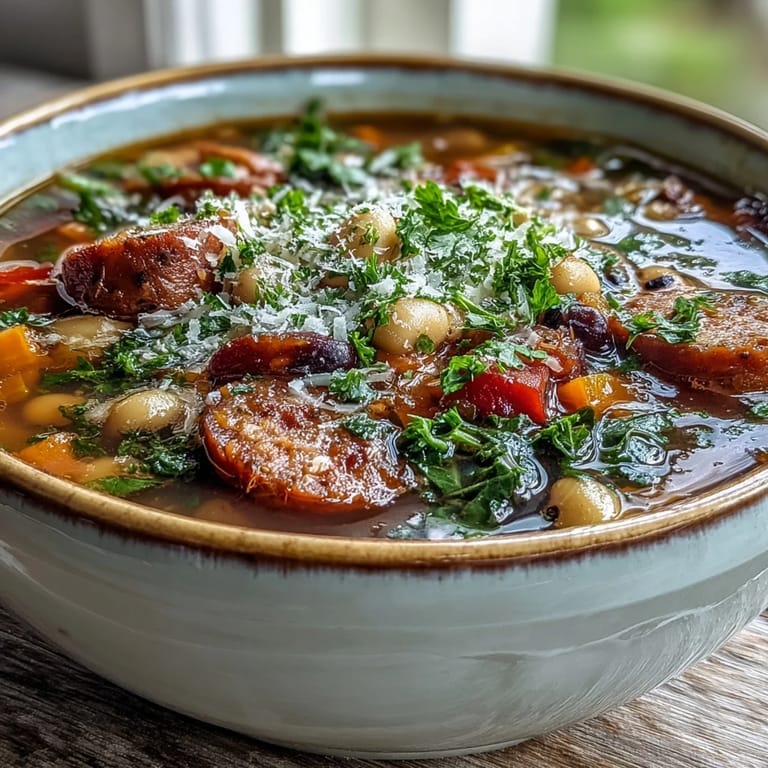
Save This soup has become the kind of recipe I make when I want to feel like I've cooked something real, without spending all afternoon in the kitchen. It's the sort of dish that reminds you that the simplest combinations, treated with care, can be exactly what you needed.
Recipe FAQs
- → Can I make this soup vegetarian?
Simply omit the Italian sausage and swap chicken broth for vegetable broth. Add smoked paprika or extra vegetables to maintain depth of flavor.
- → How long does this soup keep?
Store in an airtight container in the refrigerator for up to 4 days. The flavors continue to develop, making it even better the next day.
- → Can I use dried black-eyed peas instead of canned?
Yes, soak and cook 1 cup dried peas until tender before adding. This will extend your preparation time but yields excellent texture.
- → What can I serve with this soup?
Crusty bread, cornbread, or steamed rice make perfect accompaniments. A light Chianti or Pinot Noir pairs beautifully with the savory flavors.
- → How can I make this soup thicker?
Mash a portion of the black-eyed peas against the side of the pot before serving. This releases starch and creates a richer, more substantial broth.