 Save
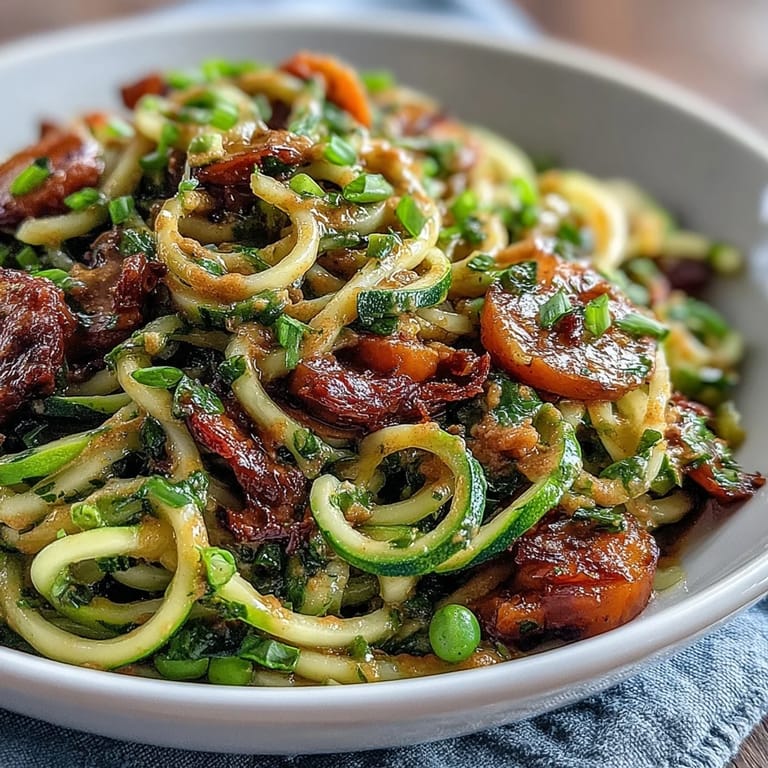
Save There's something almost meditative about spiralizing zucchini, watching those green ribbons curl out in perfect little nests. I stumbled onto this recipe on a sweltering afternoon when my fridge was overflowing with vegetables I'd bought with good intentions but hadn't touched. The peanut sauce came together in minutes, and suddenly I had dinner that felt both light and completely satisfying. It's become my go-to when I need something healthy that doesn't taste like punishment.
My neighbor stopped by unannounced one evening while I was making this, and the aroma of sesame oil and garlic hitting the hot pan was apparently too much to ignore. She sat at the counter and watched the whole thing come together, then asked for the recipe before even tasting it. That's when I knew this wasn't just weeknight food—it was the kind of thing people actually wanted to know how to make.
Ingredients
- Spiralized zucchini (about 6 cups from 4 medium zucchinis): The base of everything here, and spiralizing them yourself makes such a difference in texture compared to pre-spiralized versions that get watery.
- Red bell pepper, thinly sliced: This brings sweetness and a slight crunch that keeps the whole dish from feeling too soft.
- Julienned or spiralized carrot: Think of this as your textural contrast and natural sweetness booster.
- Snap peas, trimmed and halved: They stay crisp if you don't overwork them, and they add a pop of fresh vegetable flavor.
- Green onions, thinly sliced: Save some for garnish because that final brightness makes the whole dish sing.
- Fresh cilantro, chopped (optional): I was skeptical at first, but it's what transforms this from good to memorable.
- Natural peanut butter (smooth or crunchy): Skip the sweetened kinds—you want the real stuff with just peanuts and maybe a tiny bit of salt.
- Low-sodium soy sauce or tamari: Tamari is your friend if you're avoiding gluten, and it adds a savory depth without overpowering.
- Rice vinegar: This keeps the sauce bright and cuts through the richness perfectly.
- Lime juice: Fresh lime is non-negotiable here—bottled won't give you that living quality.
- Maple syrup or honey: Just enough to balance the salty and tangy elements.
- Toasted sesame oil: This is the secret ingredient that makes people ask what you did differently.
- Garlic and ginger, fresh: Minced small so they dissolve into the sauce rather than becoming chewy chunks.
- Warm water for thinning: Start with less and add gradually—you're building a pourable sauce, not soup.
- Red pepper flakes (optional): A whisper of heat if you like it, but the dish is beautiful without it.
Tired of Takeout? 🥡
Get 10 meals you can make faster than delivery arrives. Seriously.
One email. No spam. Unsubscribe anytime.
Instructions
- Prep your vegetables like you mean it:
- Get everything spiralized, sliced, and ready on your cutting board before heat meets pan. This is where the 25-minute timing actually works—mise en place is your friend.
- Build the peanut sauce:
- Whisk the peanut butter, soy sauce, vinegar, lime juice, maple syrup, sesame oil, garlic, and ginger in a bowl, then add warm water gradually until it's silky and pourable. The sauce should coat a spoon but not pool like soup.
- Get your pan screaming hot:
- Use medium-high heat and let that skillet or wok really come alive—you want a slight sizzle when vegetables hit it. A splash of sesame oil is optional but it deepens everything.
- Start with the sturdy vegetables:
- Toss in the bell pepper, carrot, and snap peas first, stirring constantly for 2 to 3 minutes until they're tender-crisp. You're looking for that moment where they soften just enough but still have backbone.
- Add the zucchini noodles gently:
- These cook in 2 to 3 minutes, and you want to stop the moment they're heated through because overcooked zucchini turns mushy and releases water everywhere. Toss gently like you're handling something delicate.
- Pour the sauce and finish:
- Coat everything with that peanut sauce and let it warm for just 1 to 2 minutes, stirring so every strand gets coated. The heat should still be on but not aggressive.
- Plate and garnish immediately:
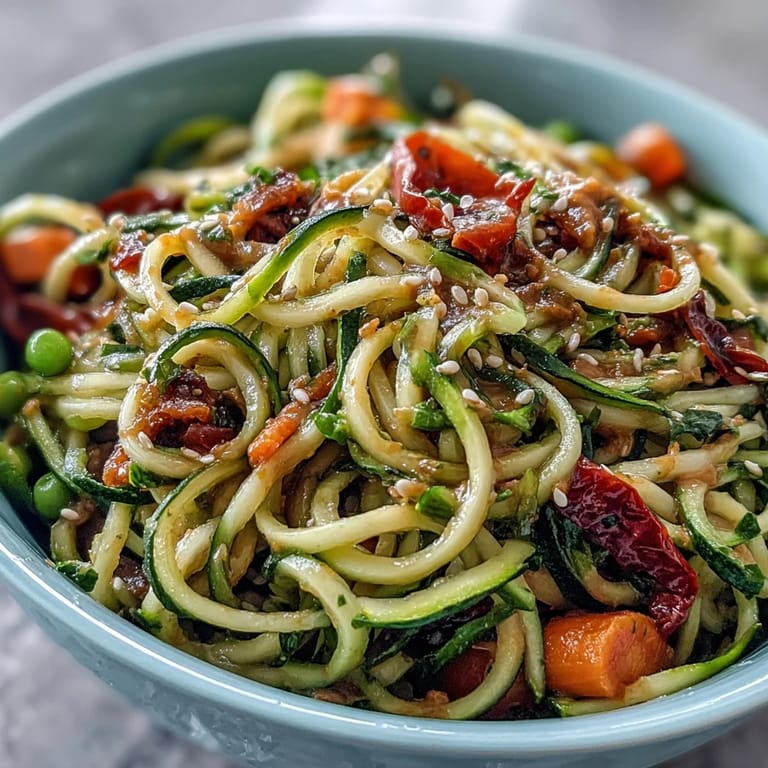
- Chopped peanuts, fresh cilantro, and extra green onions go on top while everything's still hot. Serve right away because zucchini noodles don't hold up well over time.
 Save
Save This dish somehow became the thing I make when I want to feel like I have my life together, even on days when everything else is falling apart. There's something about serving something this colorful and fresh and homemade that just shifts the energy of a meal.
Why This Works as a Light Dinner
Zucchini noodles are technically vegetables, which means you can eat a massive bowl of this without feeling heavy afterward. The peanut sauce brings enough richness that your brain registers it as satisfying comfort food, but it's nothing like cream-based sauces that sit in your stomach. It's the rare dish where healthy actually tastes indulgent.
Making It Your Own
I've made this with roasted tofu crumbled on top, with leftover shredded rotisserie chicken stirred in, and once even with shrimp that I cooked separately because I was nervous about timing. It's one of those beautiful recipes that doesn't get insulted by additions—it just gets better. Mushrooms add earthiness, broccoli adds substance, and literally any vegetable in your crisper drawer will find a home here.
The Sauce Is Everything
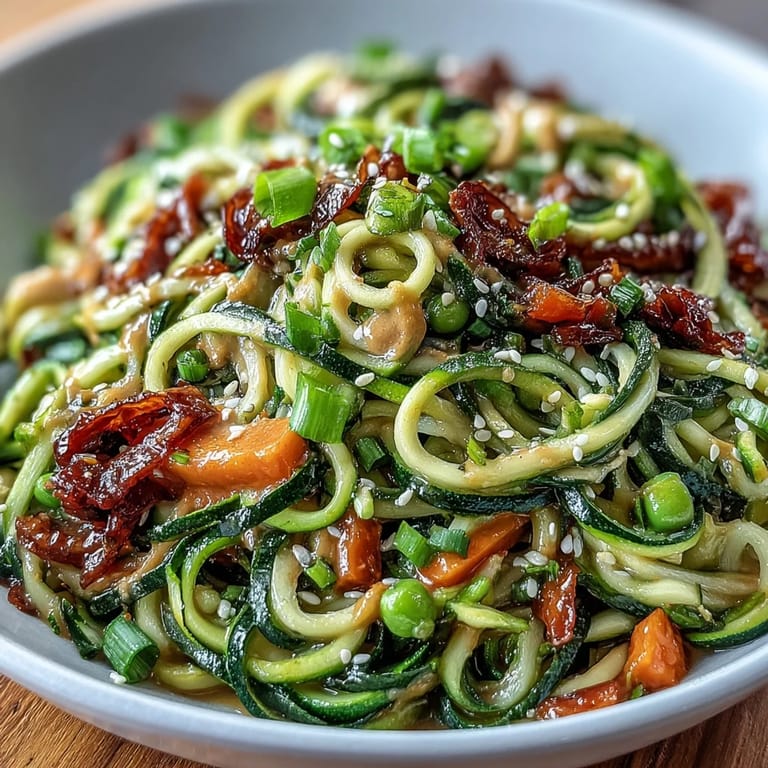
I learned this the hard way after making bland versions that made me wonder why I'd bothered at all. That peanut sauce is what takes this from a sad vegetable plate to something you actually crave. The balance of salty, tangy, sweet, and nutty is deliberate, and tasting as you go makes all the difference.
- Don't skip the sesame oil—it's two teaspoons that change everything about how this tastes.
- Fresh lime juice matters more than you think, and those two tablespoons of water are a starting point, not a rule.
- If you make extra sauce, it keeps in the fridge for days and works on grain bowls, roasted vegetables, or even as a dressing.
 Save
Save This recipe proved to me that healthy eating doesn't have to feel like a sacrifice, and that's something worth holding onto. Make it often enough and it becomes the kind of meal your hands remember how to build.
Recipe FAQs
- → How do I prevent zucchini noodles from becoming soggy?
Cook zucchini noodles briefly over medium-high heat, tossing gently for 2-3 minutes to heat through while keeping them firm. Avoid overcooking to prevent excess water release.
- → Can I substitute peanut butter with other nut butters?
Yes, almond or cashew butter can be used as alternatives for a different flavor profile or to avoid peanuts.
- → How can I add protein to this dish?
Top the stir-fry with grilled tofu, chicken, or shrimp to increase protein content and create a more filling meal.
- → What is the best way to thicken or thin the peanut sauce?
Adjust the sauce consistency by adding warm water gradually to thin it, or using more peanut butter to thicken as desired.
- → Are there allergen-friendly options for this dish?
Substitute peanut butter with sunflower seed butter for a nut-free version and use coconut aminos instead of soy sauce for a soy-free alternative.