 Save
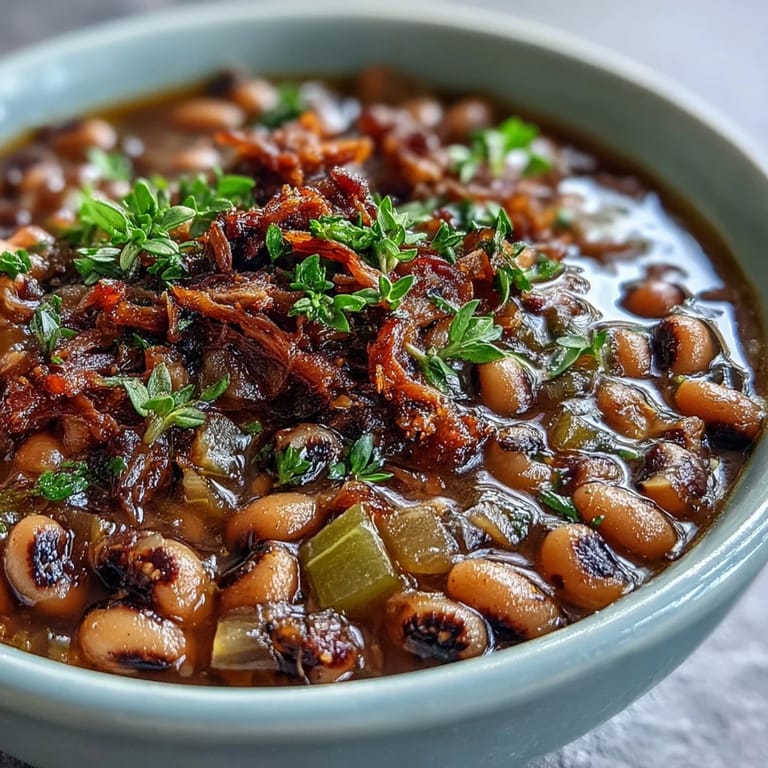
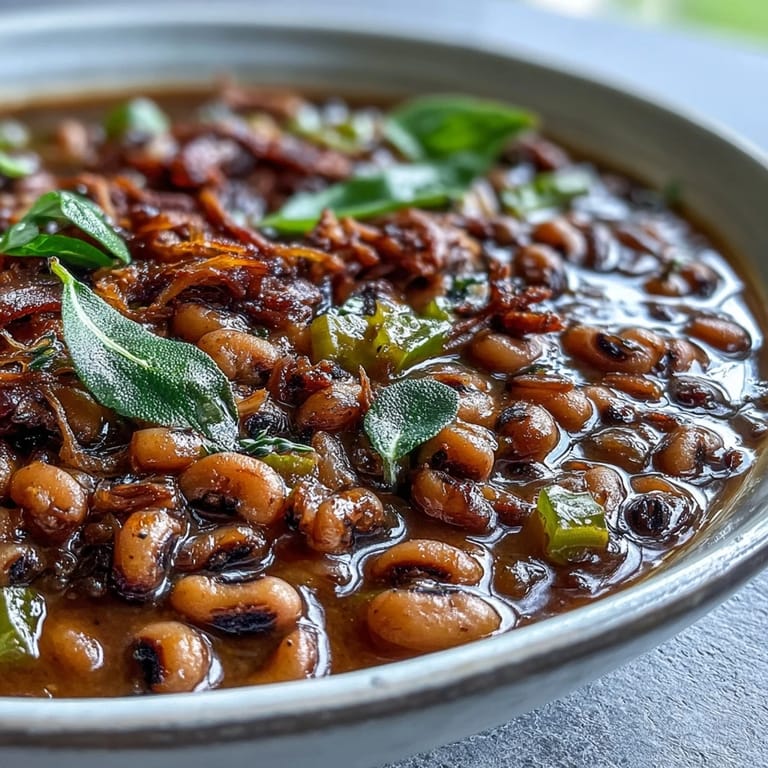
Save My grandmother used to say that black-eyed peas on New Year's Day weren't just about tradition, they were insurance. Every January first, while fireworks popped outside, she'd have a pot simmering on the stove, the smell of smoked pork and Creole spices filling the kitchen like an old prayer. I didn't understand then why a simple legume could carry so much weight, but somewhere between the first spoonful and the second helping, I realized it wasn't really about luck at all. It was about showing up for yourself with something warm, something rooted, something that tastes like home.
Years ago, I served this to friends who'd never had black-eyed peas before, and watching them go back for thirds while arguing about whether cornbread or rice was the better companion told me everything. One of them asked why it tasted like it had been cooking for days when we'd started just that morning, and I realized that's the whole secret—the peas absorb every whisper of flavor from the pork and spices, and patience is the ingredient that does the real work.
Ingredients
- Black-eyed peas (1 pound): These little legumes with their distinctive dark eye are your foundation, and rinsing them removes dust while sorting catches any stones hiding in the mix.
- Smoked pork neck bones or ham hocks (1½ pounds): This is where the soul lives, the source of that savory depth that makes the whole pot sing.
- Onion, celery, and green bell pepper (1 large onion, 1 celery stalk, 1 green bell pepper): This holy trinity builds flavor from the ground up, creating sweetness and aromatic backbone.
- Garlic (4 cloves): Added after the softer vegetables, it perfumes the oil and announces itself without overpowering.
- Water or low-sodium chicken broth (7 cups): The canvas on which everything else paints itself, so use something you'd actually drink.
- Creole seasoning (1½ teaspoons): This blend carries paprika, cayenne, garlic, and oregano, giving you the warm complexity of New Orleans in a single shake.
- Bay leaf, thyme, smoked paprika, and black pepper: Each one adds a distinct note, from the bay's subtle earthiness to the paprika's gentle smoke that echoes the pork.
- Salt (1 teaspoon, adjusted to taste): Hold back and taste before adding more, since the pork and broth already bring their own salinity.
- Fresh parsley and hot sauce (optional): Parsley brightens the finish while hot sauce lets everyone find their own heat level.
Tired of Takeout? 🥡
Get 10 meals you can make faster than delivery arrives. Seriously.
One email. No spam. Unsubscribe anytime.
Instructions
- Soak the peas:
- Cover them with water the night before and let them rest in the cold—this softens them and makes them cook more evenly. If you're short on time, pour boiling water over them, wait an hour, and drain; it works surprisingly well, though overnight still wins.
- Build your base:
- Heat oil in your Dutch oven over medium heat and let the onion, celery, and bell pepper soften for about five minutes until they begin to smell sweet and golden. You're not looking for color here, just surrender.
- Wake up the garlic:
- Add the minced garlic and let it toast for just a minute—this brief pause transforms it from raw to mellow without letting it turn bitter.
- Bring everything together:
- Add your drained peas, the smoked pork, broth, and all the seasonings at once, stirring gently to distribute everything evenly. The pot should look generous and full, like a promise.
- Let it simmer low and slow:
- Bring the whole thing to a boil first, then drop the heat to low and cover it—this is where patience becomes flavor, about ninety minutes as the peas grow tender and the pork surrenders its richness. Stir occasionally, not obsessively, just enough to make sure nothing sticks to the bottom.
- Finish the pork:
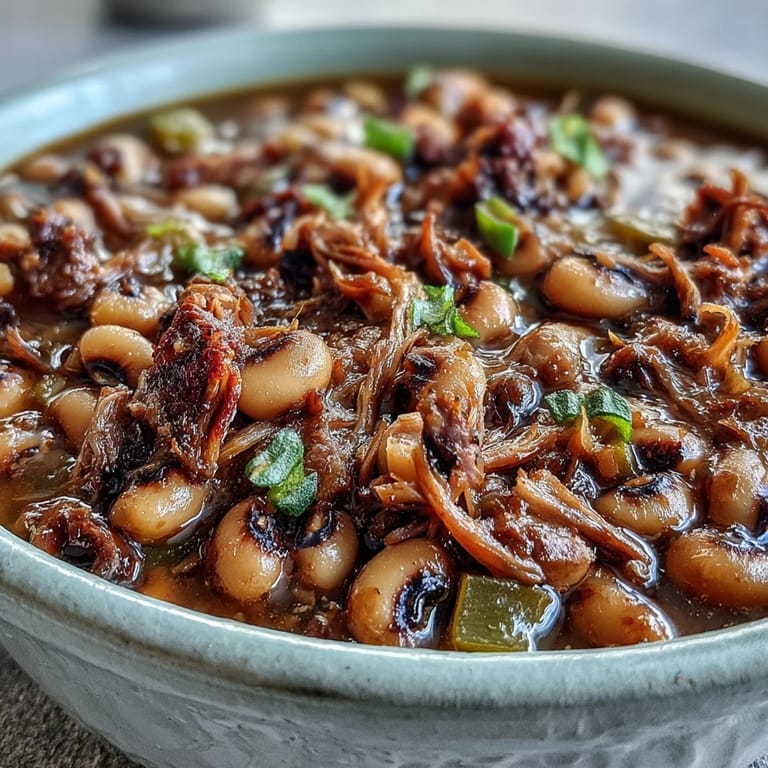
- Once the peas are creamy and the pork is falling apart, fish out those bones and shred any meat clinging to them, returning the meat to the pot and discarding the rest. Taste and adjust salt, remove the bay leaf, and you're nearly home.
- Serve with intention:
- Ladle it into bowls while it's still steaming, add a small handful of parsley if you have it, and let each person find their own relationship with heat by passing the hot sauce around the table.
 Save
Save There was a January when the pipes froze and half my family couldn't make it to dinner, so I ended up eating this alone at my kitchen counter at midnight, watching sleet coat the windows. That pot of black-eyed peas felt like company, like my grandmother's hands stirring something into the future that she couldn't see but believed in anyway.
Why Soaking Matters More Than You Think
The dried pea is like a tiny, locked door, and soaking is the key that lets water slip inside and soften all those starches and proteins waiting in the dark. When you skip this step, you're asking heat to do in ninety minutes what water could do overnight, and heat gets impatient and turns the outside mushy while the inside stays firm. I learned this the hard way at a potluck where I was running late and thought I was clever enough to skip ahead.
The Smoke Matters More Than You'd Guess
Smoked pork neck bones carry a flavor that's almost impossible to replicate with anything else, a depth that sits in the background and makes people say things like it tastes like home without quite knowing why. If you can't find neck bones, ham hocks work beautifully and are often easier to locate, though the flavor will be slightly different. The smoke becomes the thread connecting every spoonful, so don't treat it as interchangeable with regular pork.
Customizing Without Losing Your Way
This recipe bends without breaking, which is why it's survived a hundred years and a thousand family tables. You can dial the heat up or down with the Creole seasoning, swap broth for water, even go vegetarian by dropping the pork and adding a teaspoon of liquid smoke. One thing stays constant though—the long, gentle simmer that turns individual ingredients into something greater than themselves.
- If you're vegetarian, liquid smoke and smoked paprika together create an echo of the original that honors the tradition.
- Make a double batch because this freezes beautifully for three months and tastes even better the second time around.
- Always taste before serving because salt is personal, and someone else's perfect might be your too much.
 Save
Save Every January, I think about the luck my grandmother believed in and wonder if it was really luck at all, or just the certainty that comes from doing something intentional and good for yourself. This dish is a promise you keep with yourself, one slow-simmered spoonful at a time.
Recipe FAQs
- → Why are black-eyed peas eaten on New Years?
Black-eyed peas are a Southern tradition believed to bring good luck and prosperity in the coming year. The peas symbolize coins, and when paired with greens (representing paper money) and cornbread (representing gold), they create a complete meal for fortune and abundance.
- → Do I need to soak the black-eyed peas overnight?
Overnight soaking is recommended for the most tender texture, but you can use the quick-soak method: cover peas with boiling water and let stand for 1 hour before draining. This helps reduce cooking time and ensures even tenderness.
- → Can I make this vegetarian?
Absolutely. Omit the smoked pork neck bones and add extra smoked paprika along with a splash of liquid smoke to maintain that signature smoky depth. You can also add a smoked turkey wing or vegetarian smoked sausage for flavor.
- → What can I substitute for smoked pork neck bones?
Smoked ham hocks, smoked turkey wings, or even a few strips of thick-cut bacon work beautifully. Each provides that essential smoky essence and richness that makes this dish so comforting and satisfying.
- → How long do leftovers keep?
Leftovers store well in the refrigerator for up to 5 days and freeze beautifully for up to 3 months. The flavors actually deepen and improve after a day or two, making this an excellent make-ahead dish for busy holiday cooking.