 Save
Save The first time I had a poke bowl was at a tiny lunch spot in Honolulu where the chef just winked when I asked how long he'd been marinating the fish. Twenty minutes, he said, like he was sharing a state secret. I'd spent years overthinking raw fish preparations, treating them like some sacred ritual that required exact temperatures and precise timing. That bowl changed everythingbright, fresh, and somehow perfect in its simplicity. Now whenever summer rolls around and I want something that feels substantial without weighing me down, this is what ends up on the table.
Last summer my neighbor came over while I was making this, stood in my kitchen watching me slice avocado and julienne carrots, and confessed she'd always been intimidated by raw fish at home. We stood there eating from the same serving bowl, dipping forks in and talking about how restaurants make everything seem so technical when really the best food is just good ingredients handled with confidence. She texted me two days later that she'd made it for her family and her kids fought over the last piece of salmon.
Ingredients
- 400 g sushi-grade salmon or tuna, cut into 1 cm cubes: Find a fish monger you trust and ask when they received their deliverythis is one ingredient where freshness matters more than anything else
- 2 tbsp soy sauce: I started keeping an extra bottle in the pantry just for this recipe because the flavor balance is exactly right
- 1 tbsp sesame oil: Toasted sesame oil adds that nutty warmth that makes everything taste more expensive
- 1 tbsp rice vinegar: This cuts through the rich fish and adds brightness without overpowering delicate flavors
- 1 tsp freshly grated ginger: Fresh ginger has this clean heat that powder can never replicategrate it right into the bowl
- 1 tsp honey or maple syrup: Just enough to take the edge off the soy sauce and help everything meld together
- 1 small garlic clove, finely minced: One clove is plentyyou want it to support the other flavors, not announce itself
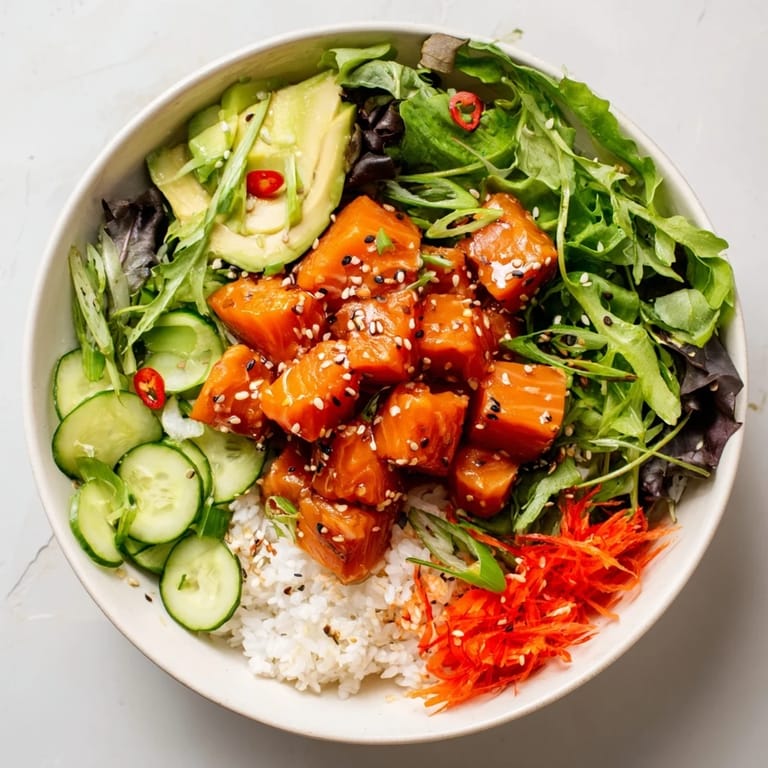
- 120 g mixed salad greens: I use whatever looks best at the market, usually a mix of something crisp (romaine) and something peppery (arugula)
- 1 medium cucumber, thinly sliced: Use a vegetable peeler to make ribbons instead of just roundsit feels more elegant and clings to the dressing
- 1 large avocado, sliced: Room temperature avocado absorbs the marinade better than cold from the fridge
- 2 small carrots, julienned: If you're short on time, a quick pass with the vegetable peeler creates thin strips that work perfectly
- 120 g cooked sushi rice or brown rice (optional): The rice turns this from a light salad into something that sticks with you longer
- 2 tbsp toasted sesame seeds: Toast them in a dry pan for 2 minutes firstthe difference between toasted and raw is night and day
- 2 tbsp sliced scallions: Use both the white and green parts for different layers of flavor
- 1 sheet nori, cut into thin strips: Kitchen shears are way easier than a knife for this and the strips curl beautifully
- Pickled ginger, to serve: I keep a jar in the fridge specifically for this recipeit's that perfect hit of sweet and sharp
- 1 small red chili, sliced (optional): Leave the seeds in if you want real heat, scrape them out for just a fruity warmth
Tired of Takeout? 🥡
Get 10 meals you can make faster than delivery arrives. Seriously.
One email. No spam. Unsubscribe anytime.
Instructions
- Whisk together the marinade:
- Combine the soy sauce, sesame oil, rice vinegar, grated ginger, honey, and minced garlic in a bowl until the honey dissolves completely, about 30 seconds of whisking. The mixture should smell incredible alreadylike a restaurant kitchen right before service.
- Marinate the fish:
- Add the cubed fish to the bowl and fold it gently into the marinade until every piece is coated, then cover and refrigerate for at least 10 minutes. I've let it go up to 30 minutes when I got distracted, but honestly, 10 minutes is all you need for the flavors to start mingling.
- Build your salad base:
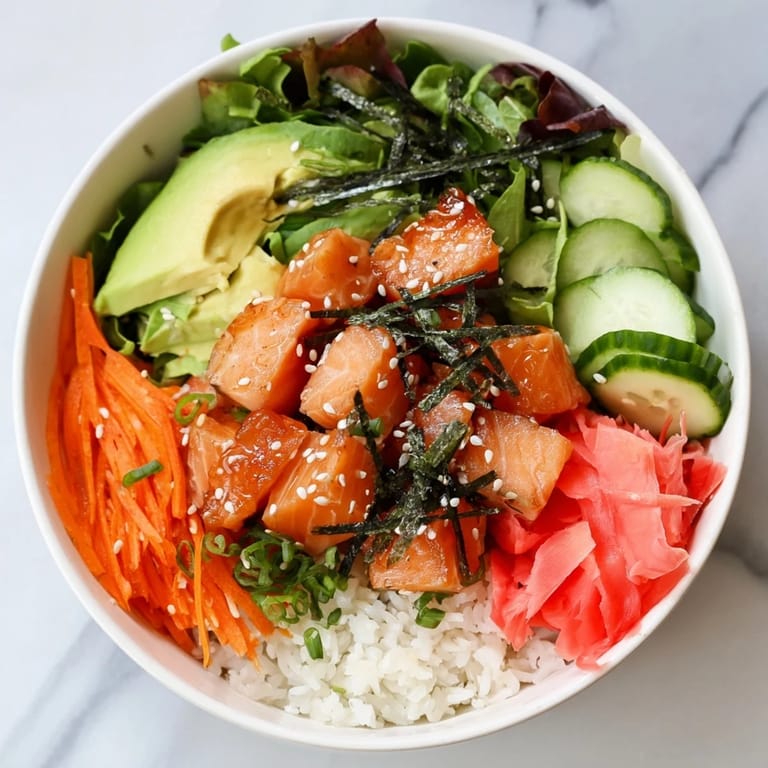
- Arrange the greens, cucumber ribbons, avocado slices, carrots, and rice (if you're using it) in individual bowls. I like to tuck some of each ingredient against the sides of the bowl so they're visible and easy to get on every forkful.
- Add the marinated fish:
- Spoon the fish over the salad base along with any remaining marinade in the bowldon't waste that liquid, it's packed with flavor. Distribute it evenly so everyone gets roughly the same amount of fish.
- Garnish with everything good:
- Scatter the sesame seeds, scallions, nori strips, pickled ginger, and sliced chili over each bowl. This is where it goes from dinner to something that looks like it came from a restaurant, so take an extra minute to make it look pretty.
- Serve immediately:
- This dish is best eaten right away while the fish is still cold and the vegetables are crisp, with everything at that perfect peak of freshness. Leftovers keep for a day but honestly, I've never had any left to save.
 Save
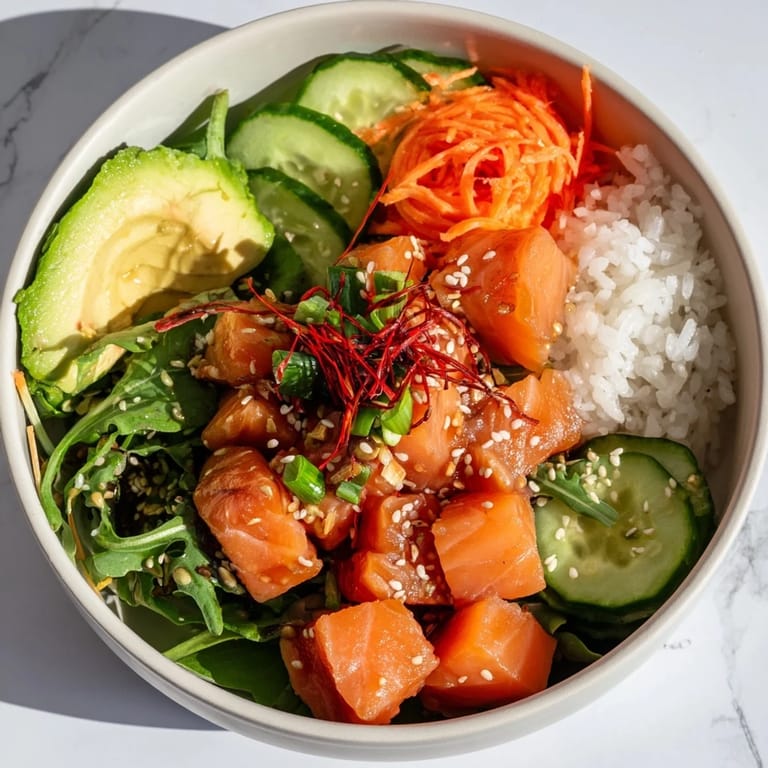
Save My partner initially turned their nose up at the idea of cold fish for dinner, then went back for thirds and asked when we could have it again. There's something about the combination of texturescreamy avocado, crisp cucumber, tender fish, that slight crunch from sesame seedsthat makes the whole experience feel extravagant even though it comes together in under 30 minutes. I've started making it for impromptu summer dinners on the patio, always with extra napkins nearby because someone inevitably gets marinade on their shirt.
Making It Your Own
The beauty of this recipe is how it adapts to whatever you have in the fridge or what looked best at the market. Sometimes I use half salmon and half tuna for variety, or swap in cubed cooked shrimp when raw fish feels too adventurous for a Tuesday night. The vegetables are completely flexiblesnow peas, shredded cabbage, radishes, or even fresh corn would all work beautifully here. I've even done a fruit version with mango and pineapple when I wanted something sweeter, though I cut back on the soy sauce in that case.
The Rice Question
Adding rice transforms this from a light lunch into something that powers you through an afternoon, but it's completely optional. When I do include it, I spread the warm rice in a thin layer to cool slightly before assembling the bowlsit absorbs the marinade better that way. Sushi rice is traditional because that slight sweetness and sticky texture bridges everything together, but brown rice adds a nutty depth I've grown to love. Cauliflower rice works shockingly well if you want to keep it lighter, just don't expect it to soak up the marinade the same way.
Meal Prep Magic
This might be the ultimate meal prep candidate because everything holds up beautifully and actually gets better as flavors meld. I prep all the vegetables and store them in separate containers, keep the marinade in a jar, and cube the fresh fish right before serving. Morning assembly takes literally five minutesgrab containers, layer ingredients, drizzle marinade, sprinkle toppings. The one thing I wouldn't prep too far ahead is the avocadotoss it with a little extra lime juice to prevent browning if you're eating it more than a few hours later.
- Keep toppings in small separate containers so they stay crisp
- Store any extra marinade in a jar for the next day
- Assemble right before eating for the best texture and temperature contrast
 Save
Save Somehow this recipe manages to feel like a treat and an everyday staple all at once.
Recipe FAQs
- → What types of fish can I use?
Sushi-grade salmon or tuna cut into small cubes works best for freshness and texture.
- → Can I substitute any ingredients for dietary needs?
Tofu or tempeh can replace fish for vegetarians; use gluten-free soy sauce for gluten sensitivity.
- → Is rice necessary in the bowl?
Rice is optional; use cooked sushi or brown rice to add more substance if desired.
- → How long should the fish marinate?
Marinate fish for at least 10 minutes to allow the flavors to infuse without overpowering.
- → What toppings enhance the flavor?
Toasted sesame seeds, scallions, nori strips, and pickled ginger add texture and umami notes.